
Limousin Cattle Breed Guide: Traits, Care & Buying Tips
A comprehensive guide to Limousin cattle for professional buyers — covering breed traits, lean meat profile, feed efficiency, sourcing from France, and transport logistics to Italy.
Table of Contents
Introduction to Limousin Cattle
The Limousin is one of France's premier beef cattle breeds and a mainstay of the European livestock trade. Known for its distinctive golden-red coat, fine bone structure, and exceptionally lean muscling, the Limousin has earned a global reputation as a breed that delivers high carcass yield with minimal waste fat. For professional buyers supplying fattening operations across Italy, the Limousin represents an outstanding combination of feed efficiency, meat quality, and sourcing reliability.
Originating from the rugged Limousin region of west-central France, the breed evolved in a demanding environment that selected for hardiness, efficient feed utilization, and strong maternal instincts. These traits remain commercially relevant today, making Limousin cattle particularly well-suited to both extensive grazing systems and intensive finishing programs.
This guide provides a thorough overview of the Limousin breed for professional livestock buyers. It covers the breed's history, physical characteristics, growth performance, feeding requirements, health considerations, sourcing strategies from France, transport logistics, and market positioning — everything needed to make informed procurement decisions.
Breed Origin and History
Limousin cattle originate from the Limousin and Marche regions of west-central France, centered around the city of Limoges. The region's granite soils, hilly terrain, and relatively harsh climate produced a breed renowned for toughness and adaptability. Historical records indicate that cattle of this type have been present in the region for thousands of years, with cave paintings in nearby Lascaux — dating back approximately 20,000 years — depicting animals resembling the modern Limousin.
The formal development of the breed began in the late 18th century when French agriculturalists started systematic selection programs. The Limousin herd book was established in 1886, and from that point forward, breeders consistently selected for muscular development, fine bone structure, and efficient feed conversion. Unlike the Charolais, which was also used as a draft animal, the Limousin was bred almost exclusively for beef production from an early stage, giving it a distinct advantage in carcass yield and meat-to-bone ratio.
By the mid-20th century, Limousin cattle began to be exported widely. The breed arrived in North America in the 1960s and quickly gained popularity for crossbreeding programs due to its ability to improve carcass quality and calving ease in composite herds. Today, France maintains the world's largest Limousin population, with over 900,000 registered breeding cows and a national herd that provides a deep and reliable supply base for international buyers.
Physical Characteristics and Conformation
Limousin cattle are immediately identifiable by their striking golden-red to wheat-colored coat, which darkens slightly around the eyes and on the lower legs. The breed has a lighter coloring around the muzzle, eyes, and underbelly. The coat is fine and short in summer, thickening in winter to provide natural insulation — a reflection of the breed's adaptation to the variable continental climate of its homeland.
The breed's conformation is distinctly different from other French beef breeds. Limousin cattle have a fine, light bone structure relative to their body mass, which contributes directly to their outstanding meat-to-bone ratio. Mature bulls typically weigh between 1,000 and 1,200 kg, while cows range from 600 to 750 kg. Despite being somewhat lighter than the Charolais, Limousin cattle often achieve comparable or superior dressing percentages due to their finer skeletal frame.
The body is long and well-muscled, with particular depth through the loin and hindquarter — the highest-value cuts. The shoulders are relatively fine and well-laid, contributing to ease of calving, which is a significant advantage of the breed. The head is small and refined with a broad forehead, and the breed is naturally horned, though polled genetics are increasingly available.
For buyers, the critical evaluation points include length of body, depth of hindquarter muscling, structural soundness of legs and feet, and overall balance. Limousin cattle that display coarse bone, narrow hindquarters, or excessive fat cover are atypical and should be avoided, as they do not represent the breed's core genetic strengths.
Growth Performance and Feed Efficiency
Limousin cattle are exceptionally efficient converters of feed to lean muscle. Their growth performance, while sometimes slightly below the heaviest continental breeds in absolute daily gain, is outstanding when measured by feed conversion efficiency and lean meat yield per kilogram of feed consumed.
Under typical European finishing conditions, Limousin steers and young bulls achieve average daily gains (ADG) of 1.2 to 1.5 kg per day. Feed conversion ratios (FCR) typically range from 5.0:1 to 6.5:1 (kg feed per kg gain), which represents some of the best efficiency figures among European beef breeds. This efficiency stems from the breed's genetic predisposition to deposit lean muscle rather than fat, meaning a greater proportion of feed energy is directed toward commercially valuable tissue.
The breed's carcass yield is exceptional. Dressing percentages of 62-66% are routinely achieved, with some well-finished animals exceeding 67%. The meat-to-bone ratio typically ranges from 4.5:1 to 5.0:1, which is among the highest of any cattle breed globally. For buyers operating on tight margins in Italian fattening systems, this yield advantage translates directly into improved profitability per head.
In Italian broutard programs, Limousin calves are typically sourced at 8-12 months of age weighing 300-400 kg and finished to slaughter weights of 600-700 kg over a 4-6 month period. Key performance benchmarks include: birth weight of 36-42 kg, weaning weight of 250-320 kg at 7-8 months, finishing weight of 600-700 kg at 14-18 months, and carcass weight of 370-450 kg.
Lean Meat Profile and Carcass Quality
The Limousin breed's most commercially distinctive trait is its lean meat profile. Limousin carcasses consistently grade as some of the leanest among beef breeds, with subcutaneous fat thickness typically 20-30% lower than continental breed averages at equivalent slaughter weights. Intramuscular fat content is correspondingly low, producing meat that meets the strong Italian consumer preference for lean, well-muscled beef.
Carcass classification under the EU EUROP grid consistently places Limousin cattle in the U and E muscle conformation classes, reflecting the breed's superior muscular development. Fat cover typically grades at 2-3 on the EU scale, indicating a light to moderate finish that is ideal for Italian retail and foodservice markets.
The meat itself is fine-grained with a distinctive tenderness that sets it apart from some other lean beef breeds. Research conducted by INRAE (France's National Research Institute for Agriculture, Food and Environment) has demonstrated that Limousin beef achieves competitive tenderness scores despite its low fat content, which is attributed to the breed's naturally fine muscle fiber structure and favorable collagen characteristics.
For Italian buyers, the Limousin's carcass profile aligns closely with market requirements for vitellone (young beef) production. The combination of high carcass yield, lean conformation, and eating quality makes Limousin-finished cattle highly marketable through both retail and foodservice channels. Processors particularly value the high proportion of premium cuts — loin, sirloin, and rump — that the breed's conformation delivers.
Feeding and Nutrition Strategies
Feeding Limousin cattle for optimal performance requires an approach that leverages the breed's natural efficiency while supporting its lean growth pattern. Because Limousin cattle are genetically predisposed to lean muscle deposition, they are less prone to over-finishing than some other breeds, which provides management flexibility in the feeding program.
In Italian finishing systems, Limousin cattle are typically fed a total mixed ration (TMR) based on maize silage, cereal grains, and protein supplements. A standard finishing ration consists of approximately 40-50% maize silage, 25-35% concentrate mix (barley, maize grain, wheat), 10-15% protein source (soybean meal, rapeseed meal), and 3-5% mineral-vitamin premix. Target dry matter intake is typically 2.0-2.4% of body weight per day.
The adaptation period following arrival from France is critical and requires careful management. Limousin broutards arriving from extensive grazing systems in France need a gradual 2-3 week transition to high-energy finishing rations. Step-up programs that incrementally increase concentrate levels are essential to avoid digestive disorders such as acidosis and bloat.
Protein requirements for growing Limousin cattle are moderate, with finishing rations typically formulated at 12-13% crude protein on a dry matter basis. Energy density should target 11-12 MJ metabolizable energy per kg dry matter during the main finishing phase. Because the breed naturally produces lean carcasses, there is less concern about over-finishing compared to earlier-maturing breeds, allowing longer feeding periods without excessive fat deposition.
Water availability is essential — finishing Limousin cattle require 35-65 liters of clean water daily depending on body weight and ambient conditions. Adequate trough space and flow rates should be ensured, particularly during hot summer months when intake peaks.
Health Considerations for Buyers
Limousin cattle are generally hardy and disease-resistant, a legacy of their development in the demanding environment of west-central France. However, several health factors deserve attention from professional buyers sourcing animals for cross-border trade.
Bovine respiratory disease (BRD) remains the primary health risk during and after transport. The stress of marketing, loading, transit, and environmental change can compromise immune function and trigger respiratory infections. Pre-transport vaccination against IBR, BVD, PI3, and BRSV is essential, ideally administered 2-3 weeks before shipment to allow adequate immune response development.
A notable advantage of the Limousin breed is its relatively low incidence of calving difficulty. Birth weights are moderate (36-42 kg), and the breed's fine bone structure contributes to ease of delivery. For operations purchasing breeding females, this translates to lower veterinary intervention costs and reduced calf mortality compared to heavier-boned breeds.
Parasite management is important for Limousin cattle sourced from French pasture systems. Strategic deworming and liver fluke treatment prior to transport helps ensure that animals arrive in optimal condition for the finishing phase. Buyers should request documentation of recent parasite treatment as part of the purchasing protocol.
All Limousin cattle imported to Italy must comply with EU health certification requirements, including negative testing for tuberculosis, brucellosis, and enzootic bovine leukosis. Bovatra manages all veterinary certification and TRACES notification processes, ensuring seamless compliance with regulatory requirements for every shipment.
Sourcing Limousin from France
France is the world's primary source of Limousin cattle, with the breed's traditional homeland in the Haute-Vienne, Corrèze, Creuse, and Dordogne departments offering the greatest concentration of specialist herds. These regions, collectively known as the Limousin heartland, provide access to tens of thousands of quality animals annually.
The French Limousin market follows seasonal patterns similar to other broutard breeds. The peak marketing period for spring-born calves runs from September through December, with a secondary peak from March to May for autumn-born animals. Pricing tends to be most competitive in the shoulder months (August-September and January-February) when demand from Italian buyers is lower.
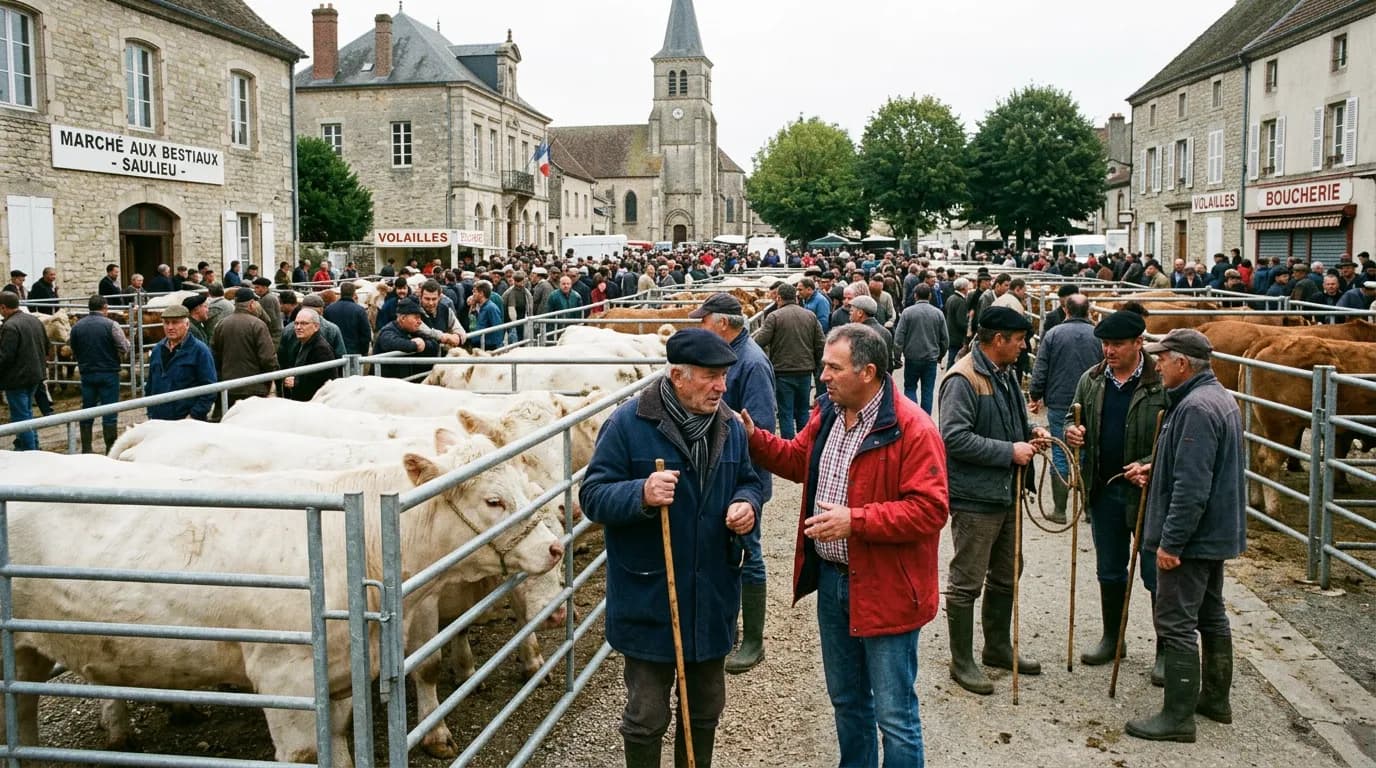
Limousin broutards are widely available through multiple channels: direct farm purchases, regional livestock markets, and organized marketing cooperatives. Major markets handling significant Limousin volumes include those at Brive-la-Gaillarde, Limoges, Ussel, and Saint-Yrieix-la-Perche. Marketing cooperatives in the region provide additional access to graded and health-certified lots.
Limousin cattle are also a cornerstone of French broutard programs specifically oriented toward Italian buyers. Many French producers in the Limousin region have long-standing relationships with Italian fattening operations and produce calves specifically selected for the Italian market's preference for lean, well-muscled animals with good growth potential.
Bovatra maintains established sourcing relationships across the Limousin heartland, providing buyers with access to consistent quality and the ability to specify age, weight, and conformation requirements with confidence.
Transport and Logistics to Italy
Transporting Limousin cattle from central-western France to Italy involves a journey of 900-1,300 km, depending on the specific origin and destination. Journey times typically range from 14 to 22 hours, which falls within the EU regulatory framework established by Council Regulation (EC) No 1/2005.
Limousin cattle are generally well-suited to transport due to their moderate temperament and robust constitution. However, proper preparation is essential to minimize stress and maintain animal welfare. Animals should be rested and fed normally in the 24 hours before loading, and transport vehicles must meet EU standards for ventilation, flooring, space allowance, and partition systems.
Loading density for Limousin cattle must comply with EU regulations, which specify minimum space allowances of 1.3-1.6 m² per animal depending on body weight. For broutards in the 350-450 kg range, approximately 1.4 m² per head is the standard allocation.
The documentation package for cross-border Limousin shipments includes TRACES notification, official health certificates, transport authorization, and journey logs for trips exceeding 8 hours. Bovatra coordinates all documentation and logistics, working with approved transporters who specialize in livestock movements between France and Italy.
Upon arrival at the destination facility in Italy, Limousin cattle should be provided with a quiet, well-bedded receiving area with immediate access to clean water and good-quality hay. The adaptation period of 2-4 weeks allows animals to recover from transport stress and begin the transition to the finishing ration under close monitoring for any health issues.
Why Choose Limousin for Italian Fattening Operations
Limousin cattle offer a compelling proposition for Italian fattening operations, particularly those targeting lean beef markets and seeking to maximize feed efficiency. The breed's combination of outstanding carcass yield, lean muscle deposition, and efficient feed conversion creates a strong economic case that has sustained its popularity in the Italian beef sector for decades.
The breed's feed efficiency advantage is particularly relevant in periods of elevated feed costs. Because Limousin cattle convert a higher proportion of dietary energy into lean tissue rather than fat, they deliver more saleable meat per unit of feed input than most competing breeds. This efficiency translates directly into margin protection when input costs rise.
Limousin cattle also fit well within Italy's evolving consumer preferences. As health-conscious eating trends drive demand for leaner beef, Limousin-finished cattle are well-positioned to meet this market requirement without sacrificing eating quality. The breed's natural tenderness and fine-grained texture ensure that lean does not mean tough — a critical distinction in quality-focused markets.
For buyers working with Bovatra, Limousin cattle benefit from deep and reliable supply from France's specialist breeding regions. Our sourcing network covers the breed's heartland comprehensively, ensuring year-round access to quality animals that meet precise buyer specifications. The breed's popularity in French broutard programs means that supply is both consistent and well-adapted to Italian finishing requirements.
Whether you prioritize feed efficiency, carcass yield, or lean meat quality, Limousin cattle deserve a prominent place in your procurement strategy. Contact Bovatra to discuss your requirements and receive a tailored sourcing proposal for Limousin cattle from France.
Source Limousin Cattle
Related Guides

Charolais Cattle Breed Guide: Characteristics, Feeding & Sourcing
Everything professional buyers need to know about Charolais cattle — from breed characteristics and growth performance to sourcing from France and transport to Italy.
Buying Cattle From France: Breeds, Markets & Export Process
A comprehensive guide to sourcing cattle from France for European buyers — covering available breeds, livestock markets, seasonal patterns, export documentation, and transport logistics.

Blonde d'Aquitaine Cattle: Complete Breed Guide for Buyers
A complete guide to Blonde d'Aquitaine cattle for professional buyers — breed characteristics, exceptional muscling, growth capacity, French sourcing, and transport to Italy.
Ready to Source Livestock — or List Your Stock?
Whether you are a buyer looking for specific breeds or a seller seeking reliable access to European buyers, Bovatra manages the full transaction cycle.