Buying Cattle From France: Breeds, Markets & Export Process
A comprehensive guide to sourcing cattle from France for European buyers — covering available breeds, livestock markets, seasonal patterns, export documentation, and transport logistics.
Table of Contents
France: Europe's Largest Cattle Exporter
France holds the position of Europe's largest beef cattle producer and one of the continent's most significant livestock exporters. With a national herd exceeding 17 million head — including approximately 4 million suckler cows — France produces a surplus of young cattle that far exceeds domestic finishing capacity. This structural surplus has made France the natural supply base for fattening operations across southern Europe, and Italy in particular.
Italy imports between 800,000 and 1,000,000 live cattle annually, and France consistently accounts for the largest share of these imports. The relationship between French cow-calf producers and Italian fattening operators is one of the most established trade corridors in European agriculture, dating back to the 1960s when Italian beef consumption began its rapid expansion.
For professional buyers, France offers unmatched advantages: breed diversity, consistent quality, large volumes, well-organized marketing channels, and geographic proximity to Italy's major fattening regions in the Po Valley. Understanding how the French cattle market operates is essential knowledge for any serious livestock procurement operation targeting the Italian market.
Major Breeds Available in France
France offers the widest selection of specialized beef breeds of any country in Europe. Each breed has distinct characteristics that suit different fattening systems, target markets, and buyer preferences.
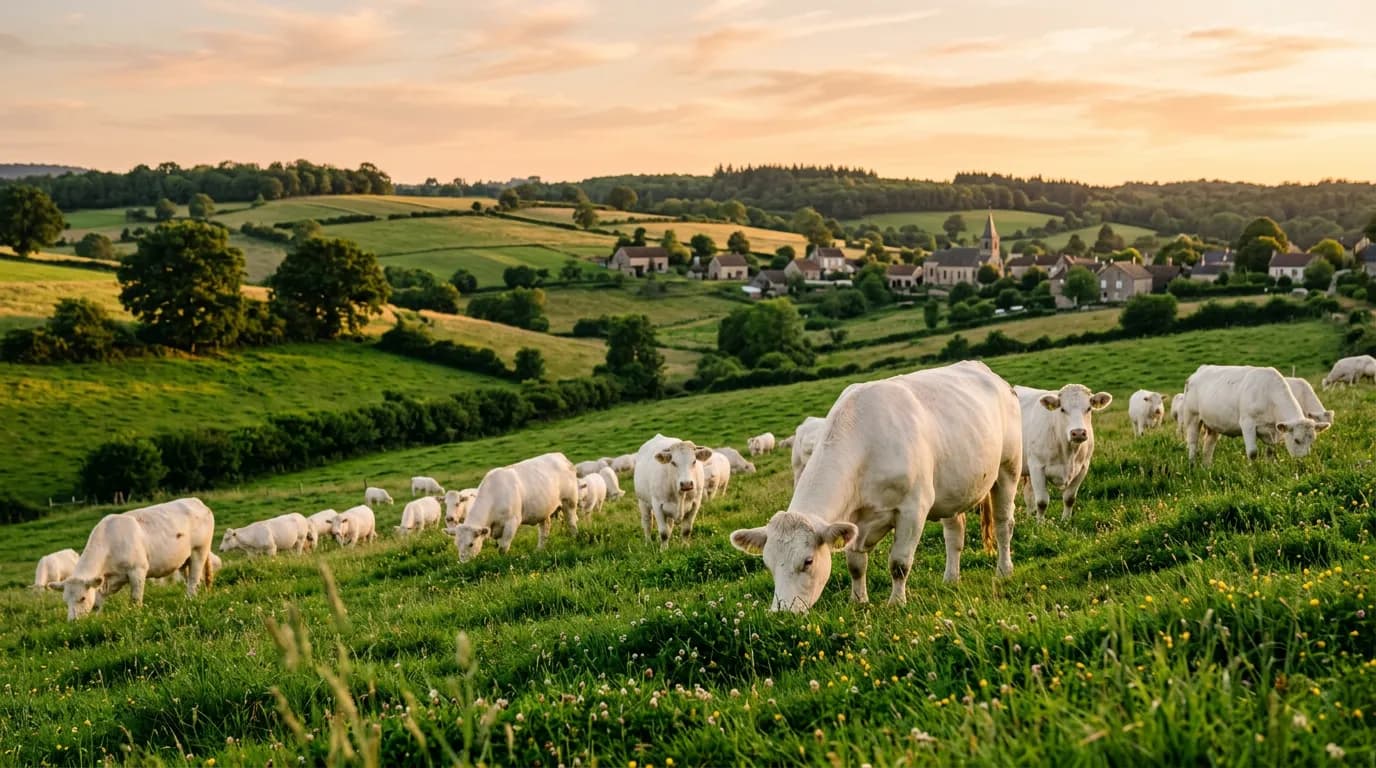
Charolais is the dominant breed in French beef production, with over 1.8 million head. Known for exceptional muscular development, rapid growth rates averaging 1.3–1.6 kg per day in finishing, and carcass yields of 60–65%, Charolais cattle are the backbone of Italy's vitellone production. They are concentrated in the Burgundy, Nivernais, and Bourbonnais regions of central France.
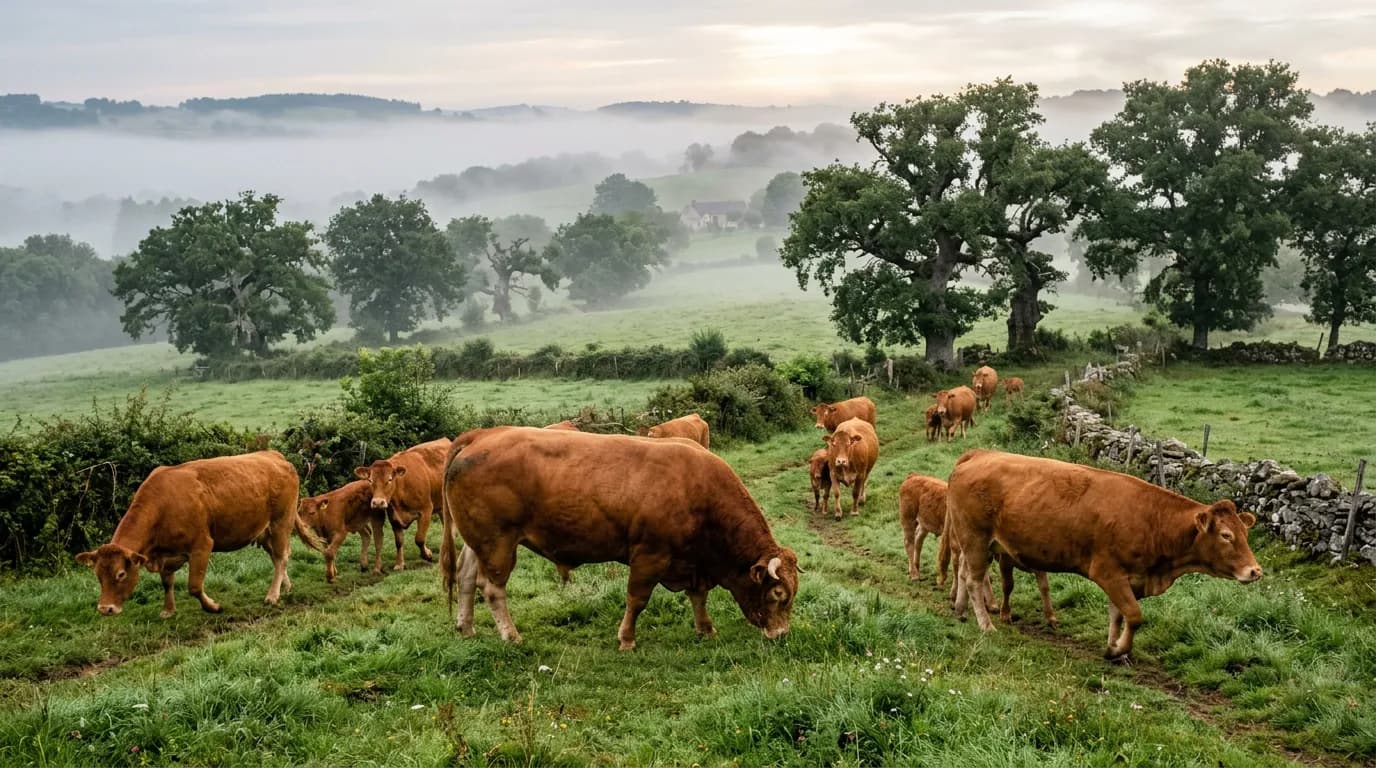
Limousin cattle, numbering over 1 million head, are the second major beef breed. They are renowned for fine-boned conformation, high dressing percentages (often exceeding 62%), and excellent meat quality with lower fat cover than Charolais. Limousin are concentrated in the Limousin, Dordogne, and Charentes regions of southwest-central France.
Blonde d'Aquitaine is France's third major beef breed, primarily found in the Pyrenees and southwest France. These cattle are exceptionally heavy-muscled with very lean carcasses, and they offer excellent feed conversion. They are increasingly popular with Italian buyers seeking maximum lean meat yield.
Salers cattle originate from the volcanic Auvergne region and are valued for their hardiness, maternal qualities, and rich-flavored meat. While less common in Italian fattening lots, Salers crosses are gaining interest for extensive finishing systems.
Aubrac cattle from the Massif Central share many qualities with Salers — exceptional foraging ability and adaptability — and are increasingly sought after for quality beef programs that emphasize terroir and traditional production methods.
Beyond these purebreds, France produces significant numbers of crossbred calves, particularly Charolais-cross and Limousin-cross animals from dairy herds. These crossbreds offer a more economical entry point for buyers while still delivering respectable finishing performance.
Livestock Markets and Purchasing Channels
The French cattle market operates through several distinct purchasing channels, each with its own advantages and logistics.
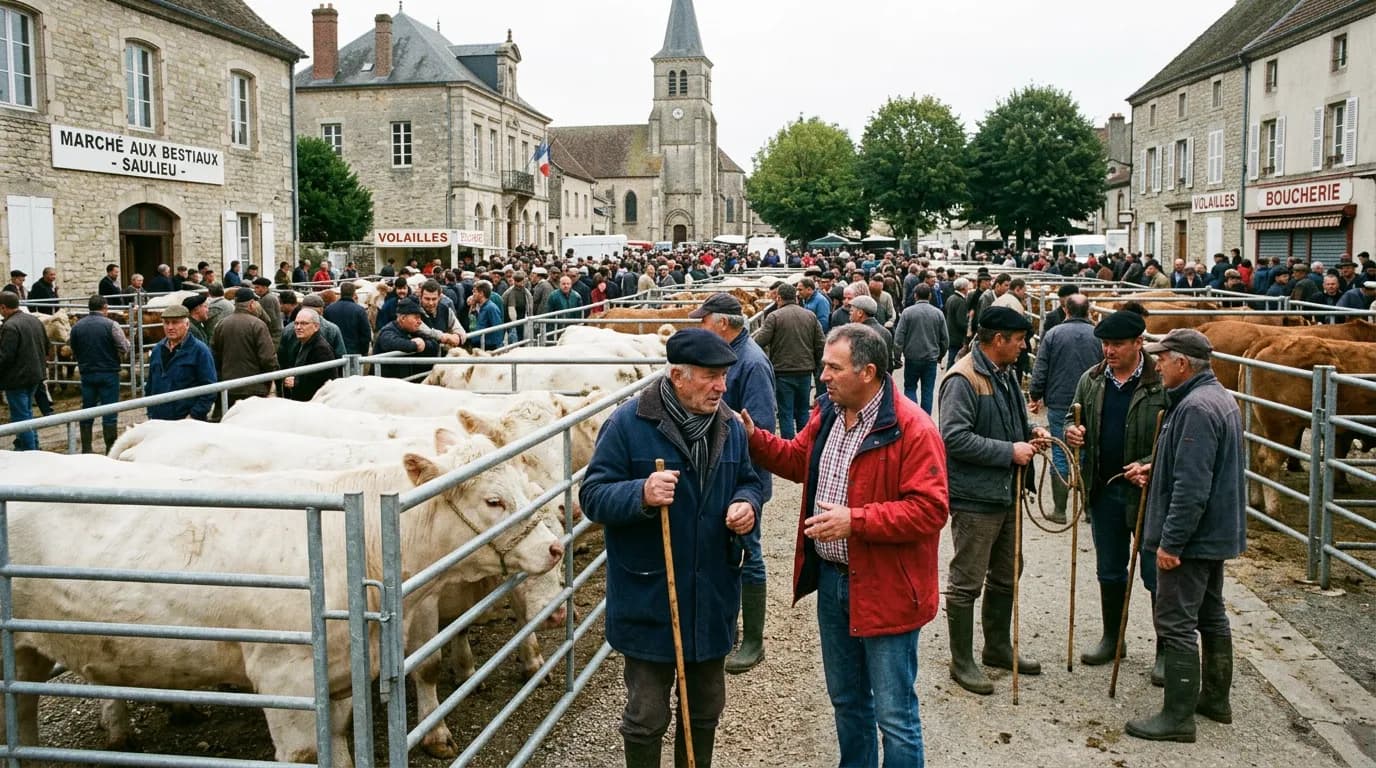
Livestock markets (marchés aux bestiaux) remain an important trading venue. France operates approximately 200 livestock markets across the country, with the most significant for beef cattle located in regions with high concentrations of suckler herds. Saint-Christophe-en-Brionnais in Saône-et-Loire is France's most famous cattle market and one of the oldest in Europe, handling primarily Charolais cattle every Wednesday. Other major markets include Moulins (Allier), Laissac (Aveyron), Châteaumeillant (Cher), and Sancoins (Cher). Markets offer transparency in pricing and allow buyers to visually assess and select animals.
Direct farm purchases represent a significant and growing channel. Buying directly from producers allows greater control over animal selection, with the ability to assess animals in their home environment and negotiate specifications precisely. However, direct purchasing requires either strong local knowledge or a trusted intermediary with established relationships in the farming community.
Broker and agent networks are widely used by Italian buyers. French livestock brokers (négociants en bestiaux) specialize in assembling loads of cattle that match buyer specifications from multiple farms. They offer the advantage of consolidating purchases efficiently and managing local logistics, though their commission adds to costs.
Cooperative marketing groups such as Charolais Horizon, Coop de France, and regional producer organizations offer structured purchasing programs with quality guarantees and traceability from birth. These groups are particularly valuable for buyers seeking consistent quality across large volumes.
Bovatra operates across all these channels, leveraging established relationships with producers, market operators, and cooperatives to source cattle that precisely match Italian buyer requirements.
Seasonal Buying Patterns
Understanding the seasonal rhythm of the French cattle market is critical for optimizing procurement timing and pricing.
The primary broutard season runs from September through December. This is when the majority of spring-born calves — which represent the largest calving cohort in French suckler herds — reach weaning age at 6–9 months and are marketed for the first time. During this period, supply is at its highest, and Italian buyers conduct the bulk of their annual purchasing. Competition among buyers is intense during October and November, which often pushes prices to seasonal peaks despite the abundant supply.
A secondary marketing window occurs from March through May, when autumn-born calves reach weaning age. Supply volumes during this period are lower than in autumn, but so is buyer competition, which can create favorable purchasing opportunities for those with flexible timing.
The summer months of June through August represent the quietest period in the broutard market. Few calves are marketed, and those available tend to be older and heavier store cattle. Prices during summer can be lower on a per-kilogram basis, but selection is limited.
Winter months (January–February) see residual marketing of late-weaned autumn calves and some older store cattle. This can be a good period for buyers seeking heavier animals for shorter finishing programs.
Seasonal pricing can vary by 10–20% between peak and trough periods, making procurement timing a meaningful lever for managing total cost. Buyers who can maintain flexibility in their purchasing calendar and hold buffer capacity in their fattening operations can capture significant cost advantages by timing purchases outside peak demand windows.
Weather also plays a role: harsh winters or dry summers that reduce pasture availability can accelerate farmer selling decisions and temporarily increase supply, creating buying opportunities for attentive market participants.
Export Documentation and Regulatory Requirements
Exporting cattle from France to Italy requires compliance with EU intra-community trade regulations. While the single market eliminates customs duties and border controls, a structured documentation process must be followed.
The TRACES (Trade Control and Expert System) notification is the foundation of the process. The exporting veterinarian in France must create a TRACES notification for each consignment, which alerts the competent authority at the destination in Italy. This notification must be completed before the animals leave the farm of origin.
Health certificates (Intra-Community Trade Health Certificate, ICHT) must be issued by an official veterinarian in France within 24 hours before loading. The certificate confirms that the animals have been inspected, are clinically healthy, and originate from holdings that are free from notifiable diseases. The certificate also confirms compliance with tuberculosis, brucellosis, and bovine leukosis testing requirements.
Animal identification is a critical requirement. All cattle must carry approved ear tags with their unique identification number, and their passport or movement document must accompany them throughout transport. France uses the BDNI (Base de Données Nationale d'Identification) system, and all exported animals must have complete and accurate identification records.
Transport authorization requires that the carrier holds a valid EU transporter authorization (Type 1 for journeys under 8 hours, Type 2 for longer journeys). Drivers must hold a certificate of competence for animal transport. For journeys exceeding 8 hours, a detailed journey log must be prepared and approved by the competent authority before departure.
Pre-movement testing may be required depending on the health status of the origin holding and region. Buyers should confirm specific testing requirements with their veterinary advisor and ensure that all testing is completed with adequate time before planned loading dates.
Bovatra manages the complete documentation process for every transaction, working with official veterinarians in France and coordinating with Italian authorities to ensure seamless compliance.
Transport Routes to Italy
The geographic proximity of France and Italy is a significant advantage for livestock trade, with multiple efficient transport routes available depending on origin and destination.
The most commonly used route for cattle originating from central and eastern France passes through the French Alps via the Fréjus or Mont Blanc tunnels into the Aosta Valley or Piedmont. From there, animals are distributed to fattening operations across the Po Valley, Lombardy, Veneto, and Emilia-Romagna. Total journey times from central France (Burgundy, Nivernais) to northern Italy typically range from 10 to 16 hours.
For cattle originating from southern or southwestern France (Limousin, Aquitaine, Pyrenees regions), the Mediterranean coastal route through Liguria is often more direct. This route follows the autoroute through Provence and into Italy via Ventimiglia, reaching destinations in Piedmont and Lombardy within 12–18 hours depending on the exact origin.
A third option, used primarily for cattle from northeastern France, routes through Switzerland via the Grand Saint Bernard Pass or through the Simplon tunnel. This route can be efficient for deliveries to Lombardy and Veneto but involves transit through a non-EU country, which adds administrative complexity.
All transport must comply with EU Regulation 1/2005 on animal welfare during transport. For journeys exceeding 8 hours, vehicles must be equipped with mechanical ventilation, temperature monitoring, water supply systems, and satellite navigation for tracking. Loading densities must comply with EU standards — approximately 1.3–1.6 square meters per animal depending on weight.
Transport costs from France to Italy typically range from EUR 70–150 per head, depending on distance, lot size, and season. Larger loads (full truck of 30–40 head) achieve the best per-head transport economics. Bovatra coordinates all transport logistics, working with licensed carriers who specialize in livestock transport and maintain full EU compliance.
Pricing Considerations and Cost Structure
Understanding the full cost structure of buying cattle from France is essential for making profitable procurement decisions.
Base animal pricing in France is typically quoted on a live-weight basis (EUR per kg live weight) or, less commonly, on a per-head basis for specific lot descriptions. Prices vary significantly by breed, age, weight, conformation quality, and season. As a general reference, Charolais broutards (350–450 kg) typically trade in the range of EUR 2.50–3.50 per kg live weight, while Limousin broutards may command a slight premium due to their higher dressing percentage.
Beyond the base purchase price, buyers should budget for the following additional costs: transport to Italy (EUR 70–150 per head), veterinary certification and TRACES documentation (EUR 15–25 per head), broker or agent commission if applicable (typically 2–4% of purchase price), and insurance during transport (variable, typically EUR 5–15 per head).
The total landed cost in Italy — including all fees, transport, and documentation — typically adds EUR 120–250 per head above the farm-gate purchase price in France. This premium must be factored into finishing economics when calculating expected margins.
Price intelligence is critical for effective procurement. French cattle prices are reported weekly by several sources including FranceAgriMer (the national agricultural market agency), the French Livestock Institute (Institut de l'Élevage), and regional livestock market reports. Bovatra provides real-time market intelligence to buyers, drawing on data from our network of suppliers and market contacts across France.
Payment terms in the French market vary. Livestock markets typically require settlement within 8–15 days. Direct farm purchases may offer more flexible terms, particularly for established buyer relationships. Bovatra facilitates payment processing and provides transparent cost breakdowns for every transaction.
Quality Assessment and Selection Criteria
Selecting the right cattle from France requires a systematic approach to quality assessment that goes beyond visual appraisal.
Conformation scoring is the starting point. French cattle are commonly graded using the EUROP classification grid, which assesses muscular development on a scale from E (excellent) to P (poor). For fattening operations targeting the Italian vitellone market, buyers typically seek animals grading U or R — well-muscled but not excessively developed, as extreme muscling can sometimes correlate with calving difficulties in the breeding herd and temperament issues.
Structural soundness is non-negotiable. Animals must have correct leg and foot conformation to withstand the demands of transport and the finishing phase on concrete or slatted floors. Buyers should reject animals with sickle hocks, excessive toe growth, swollen joints, or any sign of lameness.
Health status of the origin herd matters as much as individual animal appearance. Buyers should inquire about the herd's vaccination history, parasite control program, BVD status (preferably PI-free tested), and any recent disease incidents. Animals from herds with strong preventive health programs consistently perform better after arrival in Italian fattening facilities.
Weight uniformity within a purchased lot is important for management efficiency. Lots with tight weight ranges (variation of less than 50 kg within a group) allow uniform feeding and marketing programs, reducing the complexity and cost of managing mixed groups.
Genetic background, while harder to assess visually, influences finishing performance. Animals from herds with documented genetic improvement programs — particularly those selecting for growth rate, feed efficiency, and carcass traits — will on average outperform animals from unselected herds. French breed associations maintain extensive genetic databases that can provide performance data for specific sire lines.
Bovatra applies rigorous selection criteria to every purchase, combining physical assessment with health and genetic information to ensure that cattle delivered to Italian buyers meet the highest commercial standards.
Common Challenges and How to Avoid Them
While buying cattle from France is a well-established trade, several common pitfalls can undermine profitability if not managed carefully.
Transport stress and its aftermath represent the single largest risk. Cattle that are poorly prepared for transport, loaded at excessive densities, or subjected to rough handling can develop respiratory disease within the first two weeks of arrival. Prevention starts with selecting healthy, well-vaccinated animals and using professional carriers with proper equipment and experienced drivers.
Documentation delays can hold up entire shipments. Incomplete ear tag records, discrepancies between animal identification and passport data, or late health testing can prevent the official veterinarian from issuing the required certificates on time. Planning should build in adequate lead time — at least 7–10 days between final animal selection and planned loading date — to resolve any documentation issues.
Currency and payment risks are minimal for France-Italy trade since both countries use the euro. However, buyers should be aware of VAT treatment — intra-community cattle trade is subject to reverse-charge VAT rules, meaning the buyer accounts for VAT in Italy rather than paying it in France. Proper invoicing and VAT compliance are essential to avoid tax complications.
Seasonal price spikes during peak demand periods (October–November) can significantly increase procurement costs. Buyers who commit to forward contracts or build purchasing programs that spread procurement across multiple months can mitigate this risk.
Mismatched expectations between buyer specifications and delivered animals are a perennial source of disputes. Clear, written specifications covering breed, age range, weight range, conformation grade, and health requirements — agreed before purchase — are the best protection. Bovatra provides standardized purchase specifications and quality guarantees for every transaction, eliminating ambiguity and protecting both parties.
Why Buy Cattle from France Through Bovatra
For fattening operations and livestock businesses across Europe, France represents the most reliable, diverse, and scalable source of quality cattle on the continent. The combination of world-class beef genetics, large available volumes, established marketing infrastructure, and central geographic position makes France the natural first choice for professional cattle procurement.
However, navigating the French market effectively requires deep local knowledge, established supplier relationships, and expertise in cross-border logistics and compliance. This is precisely what Bovatra provides.
Our French sourcing network spans the major beef-producing regions from Burgundy to the Pyrenees, giving buyers access to the full range of breeds, ages, and quality levels. We manage every aspect of the procurement process — from animal selection and health certification to transport coordination and delivery to your facility.
Whether you need Charolais broutards from Burgundy, Limousin store cattle from the Massif Central, or Blonde d'Aquitaine young bulls from the southwest, Bovatra delivers cattle that meet your specifications, on time, fully documented, and in compliance with all EU regulations.
Contact Bovatra today to discuss your requirements and receive a sourcing proposal tailored to your operation's needs.
Source Cattle from France
Related Guides
Charolais Cattle Breed Guide: Characteristics, Feeding & Sourcing
Everything professional buyers need to know about Charolais cattle — from breed characteristics and growth performance to sourcing from France and transport to Italy.
Limousin Cattle Breed Guide: Traits, Care & Buying Tips
A comprehensive guide to Limousin cattle for professional buyers — covering breed traits, lean meat profile, feed efficiency, sourcing from France, and transport logistics to Italy.
Broutard Trade in Europe: Sourcing Young Cattle for Fattening
A comprehensive guide to the European broutard trade — covering what broutards are, the France-to-Italy pipeline, breeds, seasonal availability, quality grading, pricing dynamics, and buyer specifications.
Ready to Source Livestock — or List Your Stock?
Whether you are a buyer looking for specific breeds or a seller seeking reliable access to European buyers, Bovatra manages the full transaction cycle.