Broutard Trade in Europe: Sourcing Young Cattle for Fattening
A comprehensive guide to the European broutard trade — covering what broutards are, the France-to-Italy pipeline, breeds, seasonal availability, quality grading, pricing dynamics, and buyer specifications.
Table of Contents
What Are Broutards?
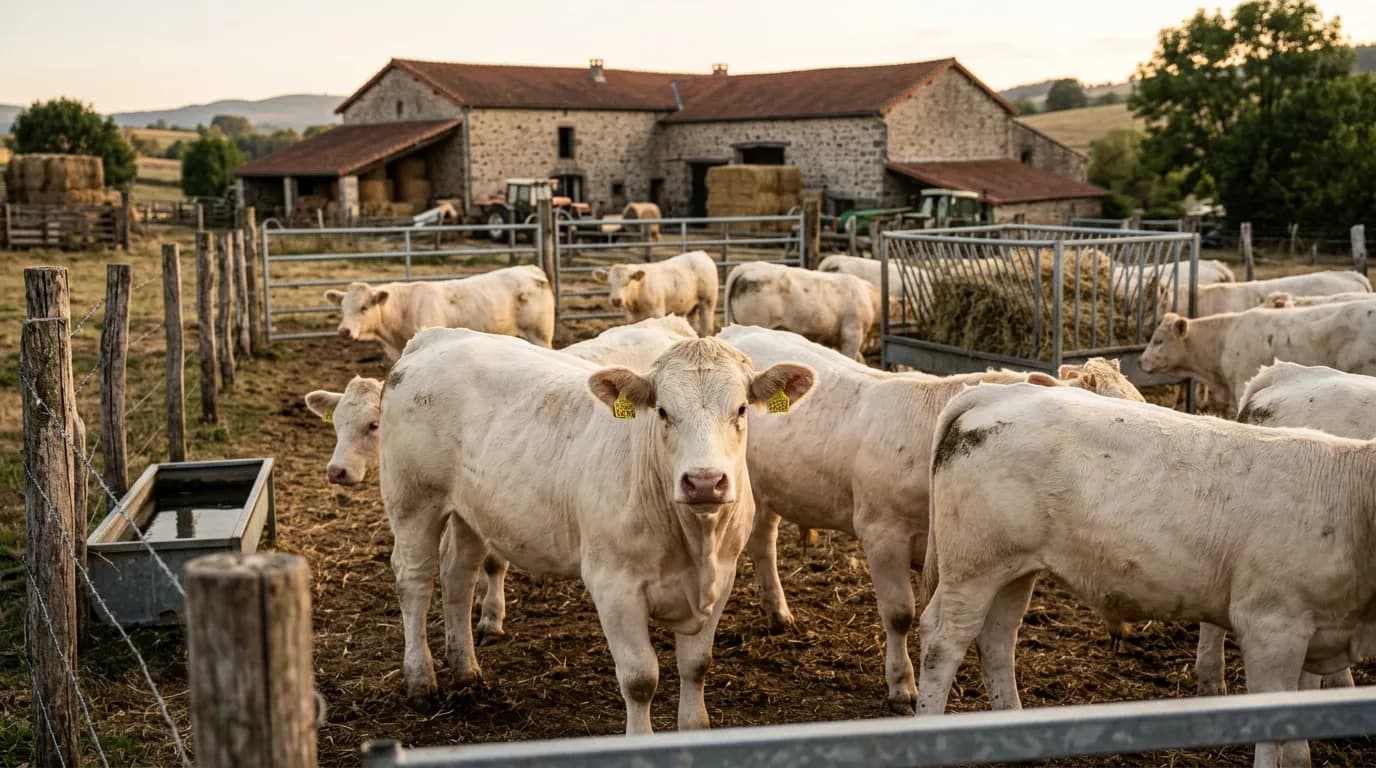
Broutard is a French term that has become the standard industry designation across European livestock markets for a specific category of young cattle: weaned calves from beef suckler herds, typically between 8 and 12 months of age, weighing 300 to 500 kilograms, and destined for finishing in specialized fattening operations. The word derives from the French 'brouter' (to graze), reflecting the animals' background — they have been raised on their mothers' milk and pasture before weaning and sale.
Broutards are the primary raw material of Europe's cross-border cattle fattening industry. Each year, approximately 1.2 to 1.5 million broutards are exported from France alone, with Italy as the dominant buyer, absorbing roughly 60-70% of total French broutard exports. Spain is the second-largest market, followed by smaller volumes to Greece, Turkey, and North African countries.
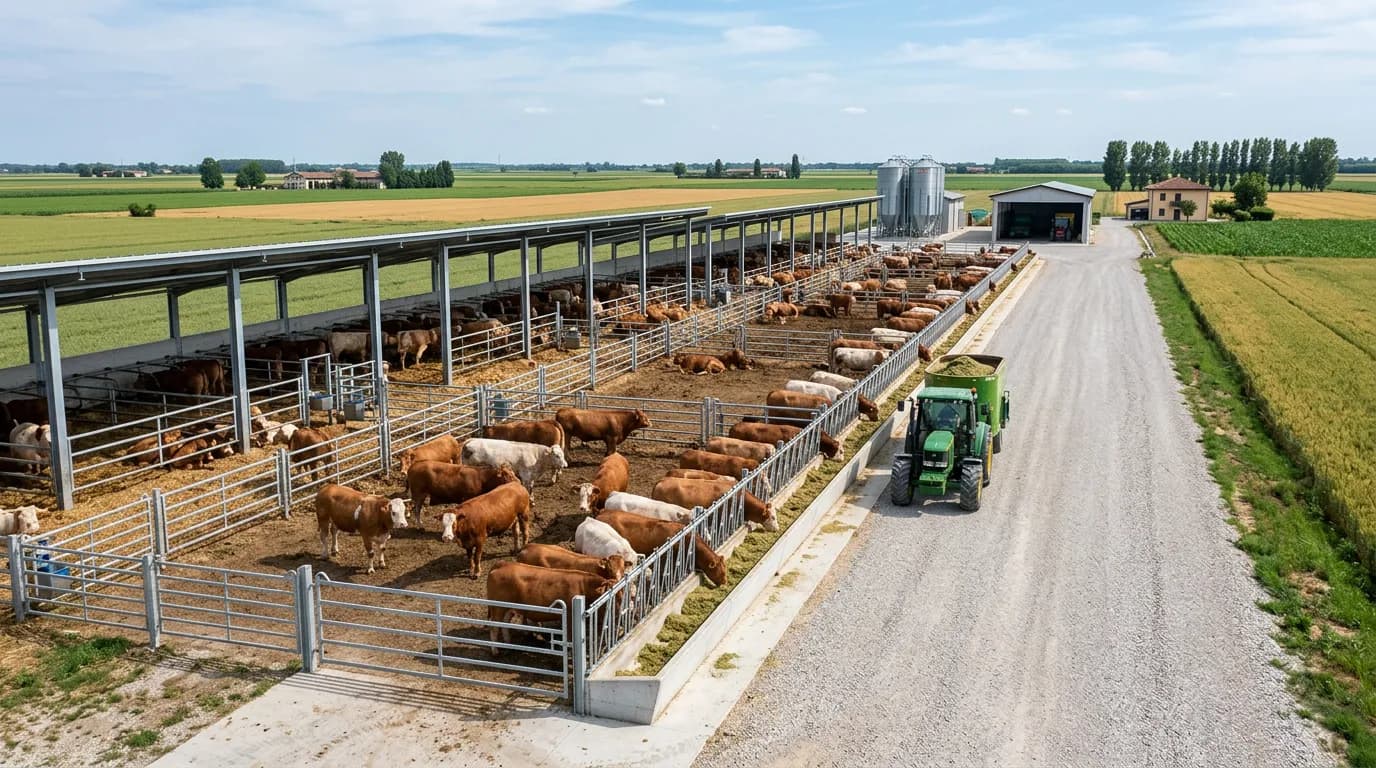
The broutard trade is fundamentally a division-of-labor arrangement within European agriculture. France, with its vast grassland resources and deep tradition of cow-calf production, specializes in breeding and rearing calves to weaning. Italy, with its intensive feedlot infrastructure and strong consumer market for young beef, specializes in the finishing phase. This complementary structure has persisted for decades because each country's comparative advantage makes the overall production system more efficient than vertically integrated alternatives.
For Italian fattening operators, the quality and consistency of broutard supply is a critical business factor. The animals they purchase — their weight, conformation, breed, health status, and temperament — directly determine the performance and profitability of the finishing cycle. Understanding the broutard market, its dynamics, and its supply channels is therefore essential for any serious participant in the Italian beef sector.
The France-to-Italy Broutard Pipeline
The France-to-Italy broutard trade is the single largest flow of live cattle between any two EU Member States, and it forms the backbone of Italy's beef fattening industry. Understanding the structure and mechanics of this pipeline is essential for both new and experienced buyers.
France's broutard production is concentrated in specific regions, each with distinct characteristics. The Massif Central — encompassing the departments of Allier, Nièvre, Saône-et-Loire, Cher, Creuse, and Puy-de-Dôme — is the heartland of Charolais broutard production. This region of rolling grasslands and temperate climate supports France's highest concentration of Charolais suckler herds and produces the largest volume of broutards for export.
The Limousin region — centered on the departments of Haute-Vienne, Corrèze, and Creuse — is the primary source of Limousin broutards. The region's granite soils and acidic grasslands have shaped a production system that produces smaller-framed but exceptionally well-muscled animals.
Southwestern France — particularly the departments of Pyrénées-Atlantiques, Gers, and Lot-et-Garonne — is the primary source of Blonde d'Aquitaine broutards, as well as significant numbers of crossbred animals.
The supply chain from farm to Italian feedlot typically involves several intermediary steps. Farmers bring animals to local livestock markets or sell directly to livestock traders (négociants). These traders assemble lots of uniform quality and specification for Italian buyers, either from single farms or by aggregating animals from multiple sources at approved assembly centers. The assembled lots are then transported to Italy by authorized livestock hauliers, with TRACES documentation accompanying each consignment.
The route from central France to northern Italy typically follows autoroute corridors through the Rhône Valley or via the Mont Blanc or Fréjus tunnels. Journey times range from 12 to 20 hours depending on origin and destination, generally falling within the EU's maximum journey time limits for cattle. Bovatra manages the complete logistics chain, from farm selection in France through to delivery at the buyer's feedlot in Italy.
Breeds in the Broutard Trade
Breed selection is one of the most important decisions for Italian buyers sourcing broutards, as it directly influences growth performance, feed efficiency, carcass quality, and ultimately the profitability of the finishing cycle.
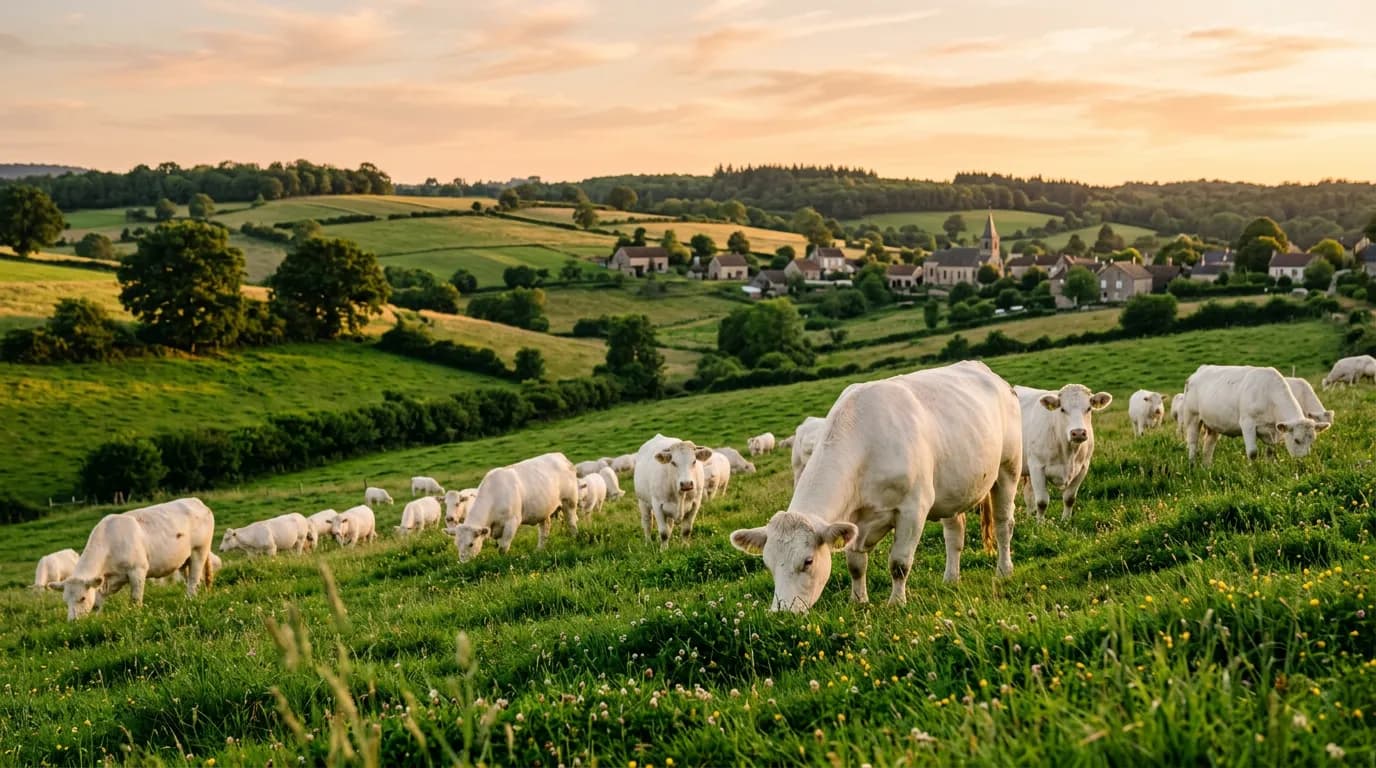
Charolais broutards dominate the France-to-Italy trade by volume. These animals are prized for their exceptional growth potential — well-bred Charolais broutards arriving at Italian feedlots at 400 kg can reach finishing weights of 680-750 kg in 5-6 months, with average daily gains consistently exceeding 1.3 kg. The breed's heavy muscling produces high carcass yields (60-65% dressing percentage) and lean, well-conformed carcasses that grade well under the EU EUROP classification system. Charolais broutards are most commonly sourced from the Massif Central regions of France.
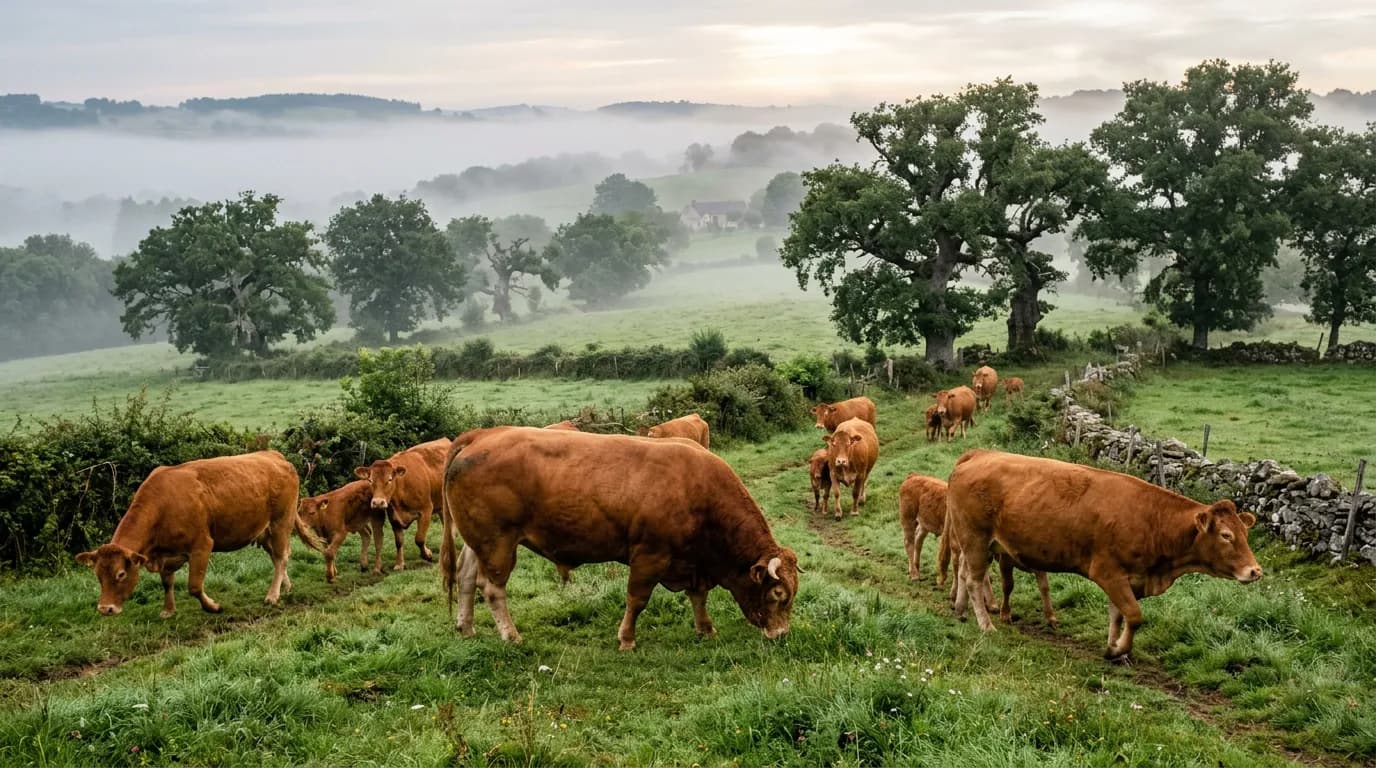
Limousin broutards are the second most traded category. Limousin cattle are characteristically lighter-framed than Charolais, with finer bone structure and exceptional muscular definition. In the feedlot, Limousin broutards demonstrate marginally lower average daily gains (1.1-1.4 kg) compared to Charolais, but their superior feed conversion efficiency and higher meat-to-bone ratio often compensate economically. Limousin beef is particularly valued in the Italian market for its tenderness, fine grain, and delicate flavor. Many Italian buyers maintain mixed Charolais-Limousin procurement programs to balance growth rate with carcass quality.
Blonde d'Aquitaine broutards represent a growing segment of the trade. This breed offers extreme muscular development — in some animals approaching or matching the double-muscling trait seen in Piemontese — and very high carcass yields that frequently exceed 65%. Blonde d'Aquitaine broutards tend to be available in smaller numbers than Charolais or Limousin, and sourcing requires access to the breed's heartland in southwestern France.
Crossbred broutards — typically Charolais-cross or Limousin-cross animals — are available at lower price points than purebred animals and can deliver competitive finishing performance. The specific cross influences the animal's characteristics: Charolais-sired crosses tend to inherit the breed's growth capacity, while Limousin-sired crosses tend toward the breed's carcass quality traits. Some Italian buyers specifically seek crossbred animals as a cost-effective alternative for their finishing programs.
Salers, Aubrac, and other regional breed broutards are traded in smaller volumes. These breeds, while less suited to intensive finishing than the three major breeds, produce distinctive meat quality that can command premiums in niche markets.
Seasonal Availability and Market Cycles
The broutard market follows pronounced seasonal patterns driven by the natural calving cycles of French suckler herds. Understanding and planning around these cycles is essential for Italian buyers seeking to optimize both supply quality and purchase pricing.
The autumn season (September through December) is the primary marketing period for broutards in France. The majority of French suckler herds operate spring-calving systems, with cows calving from January through April. These calves spend the spring and summer grazing alongside their dams before being weaned in the autumn at 7-10 months of age. The resulting wave of weaned calves entering the market from September onward creates the largest annual supply of broutards.
Within the autumn season, a characteristic price pattern typically emerges. In September, as the first animals become available, prices are often moderate as supply is still building. October and November see the highest trading volumes and often the strongest prices, as Italian buyers compete to fill their feedlot capacity before winter. December prices may soften slightly as trading activity slows around the holiday season and many feedlots approach capacity.
The spring season (March through May) represents a secondary supply peak from autumn-calving herds. These animals — born in September through November and weaned in the spring — are typically 6-8 months old and often slightly lighter than autumn-marketed broutards. The spring supply is substantially smaller than the autumn wave, representing perhaps 25-30% of annual volume, but can offer pricing opportunities for buyers with capacity to take delivery outside the main season.
During the summer months (June through August), broutard availability drops to its annual low as most spring-born calves are still suckling their dams and few autumn-born calves remain in the system. Prices during this period can be higher per kilogram due to scarcity, but the limited supply restricts overall trading volume.
Winter (January through February) represents a transitional period when late-autumn-weaned calves are still entering the market and early-spring-calving herds are beginning their calving season. Trading activity is moderate, and prices reflect the balance between declining autumn supply and emerging pre-spring demand.
Bovatra advises clients on seasonal procurement strategies that balance supply quality, pricing, and feedlot capacity. For many Italian operations, a procurement program that combines a major autumn purchase with a smaller spring top-up provides the best balance of cost and operational efficiency.
Quality Grading and Selection Criteria
The quality assessment of broutards is a critical skill for livestock buyers and one where the expertise of an experienced intermediary adds significant value. Unlike finished cattle, which are graded on a standardized carcass classification, broutards are evaluated as live animals using a combination of visual appraisal, weight data, breed documentation, and health records.
Conformation is the most important visual assessment criterion. Buyers evaluate the animal's overall muscular development, looking for width through the shoulders, depth of body, length of loin, and development of the hindquarter — the most commercially valuable cuts. A well-conformed broutard displays a balanced, blocky appearance with evident muscling visible through the skin. Animals that are narrow, leggy, or lack muscular development in the hindquarter are discounted.
Frame size — the skeletal dimensions of the animal independent of muscling — is an important consideration. Larger-framed animals have higher potential slaughter weights and may suit operations targeting heavier finished cattle. Medium-framed animals may finish more quickly and at lighter weights but can offer better feed efficiency. Italian buyers typically specify a preferred frame score range based on their feedlot system and target market.
Weight-for-age is a key performance indicator. A broutard that has achieved a high weight relative to its age has demonstrated good growth potential in the pre-weaning phase, which generally predicts above-average performance in the finishing phase. Conversely, animals that are light for their age may have experienced nutritional restriction, health challenges, or may simply be from lower-growth genetic lines.
Coat condition and general appearance provide indicators of health and nutritional status. A smooth, glossy coat suggests good nutrition and absence of heavy parasite burden. A rough, dull coat may indicate internal parasites, nutritional deficiency, or chronic health issues. Buyers also assess alertness, locomotive soundness, and temperament — quiet, well-handled animals adapt more easily to feedlot conditions and suffer less transport stress.
Health documentation includes vaccination records, disease testing results, and any treatment history. Animals with evidence of vaccination against major respiratory pathogens (IBR, BVD, PI3, BRSV) at least 2-3 weeks before sale are preferred, as this reduces the risk of respiratory disease during and after transport.
Bovatra's procurement team combines decades of livestock selection experience with deep knowledge of Italian buyer requirements. Every animal sourced through Bovatra is individually assessed against the buyer's specifications before inclusion in a consignment.
Pricing Dynamics in the Broutard Market
Broutard pricing is driven by a complex interplay of supply and demand factors that create both seasonal patterns and longer-term trends. Understanding these dynamics helps buyers time their purchases effectively and negotiate from a position of market knowledge.
The fundamental pricing unit for broutards is euros per kilogram of liveweight. Within this basic framework, prices vary significantly based on breed, weight range, conformation quality, sex (bulls typically command higher prices than steers for the Italian market), and season. As a general benchmark, Charolais broutard bulls in the 380-420 kg weight range have traded between EUR 2.80 and EUR 4.20 per kilogram liveweight over recent years, with the wide range reflecting varying market conditions.
Breed premiums are well-established. Purebred Charolais broutards typically command the highest per-kilogram prices, reflecting Italian buyers' strong preference for the breed's growth performance and carcass characteristics. Limousin broutards trade at similar or occasionally higher prices in periods of strong quality demand. Blonde d'Aquitaine, when available, often command premiums above Charolais due to their scarcity and exceptional carcass yield. Crossbred animals trade at discounts of 10-20% relative to purebred equivalents.
Weight-based pricing effects create important dynamics. Lighter broutards (300-370 kg) tend to trade at higher per-kilogram prices than heavier animals (420-500 kg), reflecting the buyer's expectation of greater total weight gain — and therefore greater profit potential — during the finishing phase. However, heavier animals offer a shorter finishing period and faster turnover of feedlot capacity. The optimal purchase weight depends on the buyer's specific economics and operational constraints.
Supply-side factors that influence pricing include the overall size of the French calf crop (affected by breeding herd size and fertility rates), weather conditions during the grazing season (drought reduces both calf growth rates and the number of animals marketed), and the availability of alternative markets for French producers (notably Spanish demand, which has grown significantly in recent years).
Demand-side factors include Italian feedlot profitability (when finished cattle prices are strong, feedlot operators bid more aggressively for inputs), feed cost expectations (when cereal and soybean prices are low, fattening margins improve and stimulate demand for feeder cattle), and the general economic environment affecting beef consumption.
Bovatra provides clients with current market intelligence, price benchmarking, and forward-looking analysis to support informed purchasing decisions. Our daily engagement with the French and Italian markets gives us real-time visibility into pricing trends that individual buyers may not have access to.
Purchasing Channels and Market Infrastructure
The French broutard market operates through several distinct purchasing channels, each with different characteristics in terms of selection quality, price formation, and logistical requirements.
Livestock markets (marchés aux bestiaux) remain an important channel for broutard trade, particularly for smaller lots and for buyers who want to physically inspect and select animals before purchase. Major markets for broutard trade include Saint-Christophe-en-Brionnais (the historic Charolais market in Saône-et-Loire), Moulins (Allier), Sancoins (Cher), and Brive-la-Gaillarde (Corrèze, for Limousin cattle). These markets operate on weekly or bi-weekly cycles, and experienced buyers can secure quality animals through competitive bidding.
Direct farm purchases offer the advantage of seeing animals in their production environment, assessing the overall quality of the herd, and establishing ongoing supply relationships with proven producers. For larger Italian buyers who require consistent quality and volume, building a network of trusted French farms is a valuable long-term strategy. Direct farm purchasing requires strong relationships and on-the-ground presence in the sourcing regions.
Livestock traders (négociants or marchands de bestiaux) are the most common intermediary in the France-Italy broutard trade. French traders specialize in sourcing and assembling lots to meet Italian buyer specifications, drawing on extensive networks of farm contacts. The trader model offers efficiency — a single intermediary can aggregate animals from dozens of farms into uniform lots — but the quality of the service depends entirely on the trader's expertise, integrity, and understanding of the buyer's requirements.
Approved assembly centers (centres de rassemblement agréés) serve as the physical consolidation point where animals from multiple sources are gathered, inspected, and prepared for export. These centers must meet EU regulatory requirements for biosecurity, veterinary supervision, and animal welfare. Animals may spend up to 6 days at an assembly center before dispatch for intra-community trade.
Bovatra operates across all these channels, selecting the most appropriate sourcing approach for each client's specific requirements. Our on-the-ground team in France maintains relationships with hundreds of farms and traders across the major broutard-producing regions, giving us the breadth of access needed to fill orders efficiently while maintaining strict quality standards.
Transport Considerations for Broutards
The transport of broutards from France to Italy is a critical phase in the supply chain that directly affects animal welfare, health outcomes, and the economic value of the consignment. Proper transport management is essential for ensuring that animals arrive in good condition and adapt quickly to their new feedlot environment.
Journey planning must comply with Council Regulation (EC) No 1/2005 on the protection of animals during transport. For the typical France-to-Italy route, journey times range from 12 to 20 hours. EU regulations allow a maximum journey time of 29 hours for cattle, provided that animals receive water and, where necessary, feed at appropriate intervals. For journeys exceeding 8 hours, a detailed journey log must be prepared, specifying the route, planned rest stops, and estimated arrival time.
Loading density is a critical welfare and commercial consideration. EU regulations specify minimum space allowances based on animal weight: approximately 1.0-1.2 square meters per animal for broutards in the 350-450 kg range. Overstocking increases stress, the risk of injury, and transport losses, while understocking wastes transport capacity and increases per-head transport costs. Experienced transporters optimize loading to balance welfare requirements with economic efficiency.
Vehicle standards for livestock transport within the EU require adequate ventilation (mechanical or natural, depending on journey length and climate), non-slip flooring to prevent animals from falling, watering facilities accessible during the journey, and partition systems to separate groups of animals and prevent overcrowding in any section. Vehicles must be thoroughly cleaned and disinfected between loads.
The timing of transport affects animal welfare outcomes. Where possible, transport during cooler periods — overnight or early morning — reduces heat stress, particularly during the summer months when daytime temperatures along the route through the Rhône Valley can be extreme. Bovatra schedules transport to optimize welfare conditions, adjusting departure times seasonally.
Post-transport management at the Italian feedlot is equally important. Animals arriving after a long journey are stressed, dehydrated, and immunologically vulnerable. Best practice involves unloading into a dedicated reception area with immediate access to clean water, offering long-stem hay for the first 24-48 hours before introducing any concentrate feed, and monitoring animals closely for signs of respiratory disease during the first 10-14 days. A well-managed reception protocol can reduce post-transport morbidity from shipping fever by 50% or more compared to poorly managed arrivals.
Transport costs from France to Italy typically range from EUR 80 to EUR 150 per head, varying with distance, lot size, fuel prices, and carrier availability. Larger lots achieve better per-head economics, and Bovatra coordinates load optimization to minimize transport costs for our clients.
Buyer Specifications and Order Management
Italian fattening operators approach broutard procurement with detailed specifications that reflect their feedlot systems, target markets, and operational preferences. Understanding how to structure and communicate these specifications is essential for efficient sourcing.
Breed specification is typically the first parameter defined. Most Italian buyers have a clear primary breed preference — Charolais, Limousin, or Blonde d'Aquitaine — and many maintain multi-breed programs. Some buyers specify purebred animals only, while others accept crosses with a minimum breed percentage (e.g., 75% Charolais or higher).
Weight range is specified as a target weight band — for example, 380-430 kg. The narrower the weight band, the more uniform the lot and the easier it is to manage feeding and finishing as a cohesive group. However, very narrow weight specifications can be harder to fill and may result in longer sourcing timelines. Most buyers specify a weight range of 40-60 kg spread (e.g., 370-430 kg) as a practical balance between uniformity and sourcing efficiency.
Age range complements the weight specification. A typical specification might be 8-12 months of age, though some buyers prefer older, heavier animals (12-15 months, 450-550 kg) for shorter finishing periods, while others seek younger, lighter animals (6-9 months, 280-350 kg) for longer, potentially more profitable finishing cycles.
Sex specification is almost universally bulls for the Italian market, as Italian consumers and the vitellone market strongly prefer young bull beef over steer beef. However, some buyers source steers for specific market segments or when bull supply is constrained.
Conformation standards are specified qualitatively — buyers describe their minimum acceptable muscular development, frame size, and overall appearance. Experienced traders translate these qualitative preferences into practical selection criteria in the field.
Health requirements typically include minimum vaccination protocols (at least IBR and BVD vaccination 2-3 weeks before dispatch), parasite treatment before transport, negative disease testing as required by EU legislation, and BVD-PI (persistently infected) free status where specified.
Delivery specifications include the desired delivery date or window, the feedlot address, and any specific unloading requirements. Italian buyers generally prefer to receive full truckloads (typically 30-45 head per load depending on weight) to optimize transport costs and simplify lot management.
Bovatra works with each client to develop a detailed procurement specification that captures all relevant parameters, then executes sourcing against this specification with systematic quality control. Our order management system tracks each consignment from initial sourcing through to delivery confirmation, providing clients with full transparency throughout the process.
How Bovatra Facilitates Broutard Procurement
The broutard trade, despite its long history and established infrastructure, remains a business where expertise, relationships, and operational excellence make a material difference in outcomes. The gap between a well-managed procurement operation and a poorly managed one translates directly into the profitability of the fattening cycle.
Bovatra provides a comprehensive broutard procurement service that covers every stage of the process, from market analysis and specification development through sourcing, documentation, transport, and delivery.
Our market intelligence function provides clients with current pricing data, supply forecasts, and strategic advice on procurement timing. We track pricing across major French markets and direct trade channels daily, giving us — and our clients — a precise view of where the market stands and where it is likely to move. This intelligence enables buyers to make informed decisions about when to buy, how much to buy, and what to pay.
Our sourcing network spans the major broutard-producing regions of France, with established relationships with hundreds of farms and professional livestock traders. This breadth of access means we can fill orders efficiently even during periods of tight supply, and we maintain strict quality thresholds regardless of market conditions. Every animal is assessed against the client's specification by experienced livestock professionals before being included in a consignment.
Documentation management is a Bovatra core competency. We handle the complete TRACES notification process, coordinate disease testing and veterinary certification, manage transporter credentials and journey planning, and ensure that every consignment is fully compliant with EU regulations before departure. Our documentation team's track record of near-zero rejection rates reflects the systematic rigor of our process.
Transport coordination ensures that animals are moved safely, legally, and efficiently from the point of assembly in France to the buyer's feedlot in Italy. We work with authorized carriers who meet our standards for vehicle quality, driver competence, and animal welfare practices.
Post-delivery support includes arrival confirmation, TRACES completion with the destination ASL, and feedback integration — we work with clients to review each delivery's performance and adjust future procurement specifications based on finishing outcomes.
The result is a procurement service that delivers consistent quality, reliable supply, and full regulatory compliance, allowing Italian fattening operators to focus on what they do best: finishing cattle efficiently and profitably. Contact Bovatra to discuss your broutard sourcing requirements and receive a tailored procurement proposal.
Source Broutards
Related Guides
Charolais Cattle Breed Guide: Characteristics, Feeding & Sourcing
Everything professional buyers need to know about Charolais cattle — from breed characteristics and growth performance to sourcing from France and transport to Italy.
Limousin Cattle Breed Guide: Traits, Care & Buying Tips
A comprehensive guide to Limousin cattle for professional buyers — covering breed traits, lean meat profile, feed efficiency, sourcing from France, and transport logistics to Italy.
Cattle Fattening in Italy: Breeds, Systems & Best Practices
An in-depth guide to Italy's cattle fattening industry — covering major regions, system types, preferred breeds, feeding programs, vitellone production, and economic considerations for professional operators.
Ready to Source Livestock — or List Your Stock?
Whether you are a buyer looking for specific breeds or a seller seeking reliable access to European buyers, Bovatra manages the full transaction cycle.