Cattle Fattening in Italy: Breeds, Systems & Best Practices
An in-depth guide to Italy's cattle fattening industry — covering major regions, system types, preferred breeds, feeding programs, vitellone production, and economic considerations for professional operators.
Table of Contents
Overview of Italy's Cattle Fattening Industry
Italy is one of Europe's largest beef producers and the continent's single largest importer of live cattle for fattening. The country's beef sector is built on a distinctive model: rather than raising cattle from birth to slaughter domestically, Italy imports the majority of its feeder cattle — primarily young weaned calves known as broutards — from France, Ireland, and other EU Member States, and finishes them in specialized fattening operations concentrated in the northern regions of the country.
This import-and-finish model has shaped Italy's beef industry for decades. The country's strong consumer preference for young, lean beef — marketed as vitellone (young bull beef) — drives demand for high-quality feeder cattle from Europe's premier beef breeding regions. Approximately 1 million head of live cattle are imported into Italy annually for fattening, with France supplying roughly 70% of this volume, followed by Ireland, Poland, and Germany.
The fattening sector is concentrated in four northern regions: Veneto, Lombardy, Piedmont, and Emilia-Romagna. Together, these regions account for over 80% of Italy's feedlot capacity and beef production. The concentration reflects the availability of key production inputs — maize silage from the Po Valley's fertile agricultural land, established slaughter and processing infrastructure, and proximity to Italy's largest consumer markets.
For international cattle suppliers and traders, understanding Italy's fattening industry is essential for meeting buyer specifications and optimizing the commercial value of consignments. This guide covers the major aspects of the industry: regional characteristics, production systems, breed preferences, feeding strategies, and the economic dynamics that drive purchasing decisions.
Major Fattening Regions
Veneto is Italy's largest cattle fattening region by volume, with the provinces of Verona, Padova, and Vicenza hosting the highest concentration of feedlot operations. The region's fattening industry benefits from abundant maize production in the Po Valley, a well-developed network of feed mills and suppliers, and proximity to major slaughterhouses and processing plants. Veneto's feedlots range from medium-sized family operations finishing 500-1,000 head annually to large commercial operations handling 5,000 or more head per year. The typical Veneto feedlot operates an intensive system with housed cattle fed a TMR (total mixed ration) based on locally produced maize silage.
Lombardy ranks second in fattening capacity, with significant operations in the provinces of Brescia, Mantova, and Cremona. The region shares Veneto's agricultural advantages — abundant maize and cereal production, flat terrain suited to large-scale farming — and adds a strong dairy industry that generates Holstein-Friesian bull calves as a secondary fattening input. Lombardy's fattening operations tend to be slightly larger on average than those in Veneto, and the region has a higher proportion of operations that integrate dairy calf finishing alongside beef breed fattening.
Piedmont has a distinctive position in Italy's fattening landscape. While the region hosts significant feedlot operations, particularly in the provinces of Cuneo, Torino, and Asti, it is also the home of the Piemontese breed — Italy's most commercially valuable native beef breed. Piedmont's fattening sector therefore includes both imported breed finishing (Charolais, Limousin) and domestic Piemontese production. The region's proximity to the French border also makes it a natural first destination for imported broutards.
Emilia-Romagna completes the quartet of major fattening regions, with operations concentrated in the provinces of Modena, Reggio Emilia, and Bologna. The region's fattening industry is closely integrated with its renowned food processing sector — Emilia-Romagna's beef production feeds into the supply chains for traditional Italian meat products. The region also has a significant veal production sector alongside its beef fattening operations.
Intensive Feedlot Systems
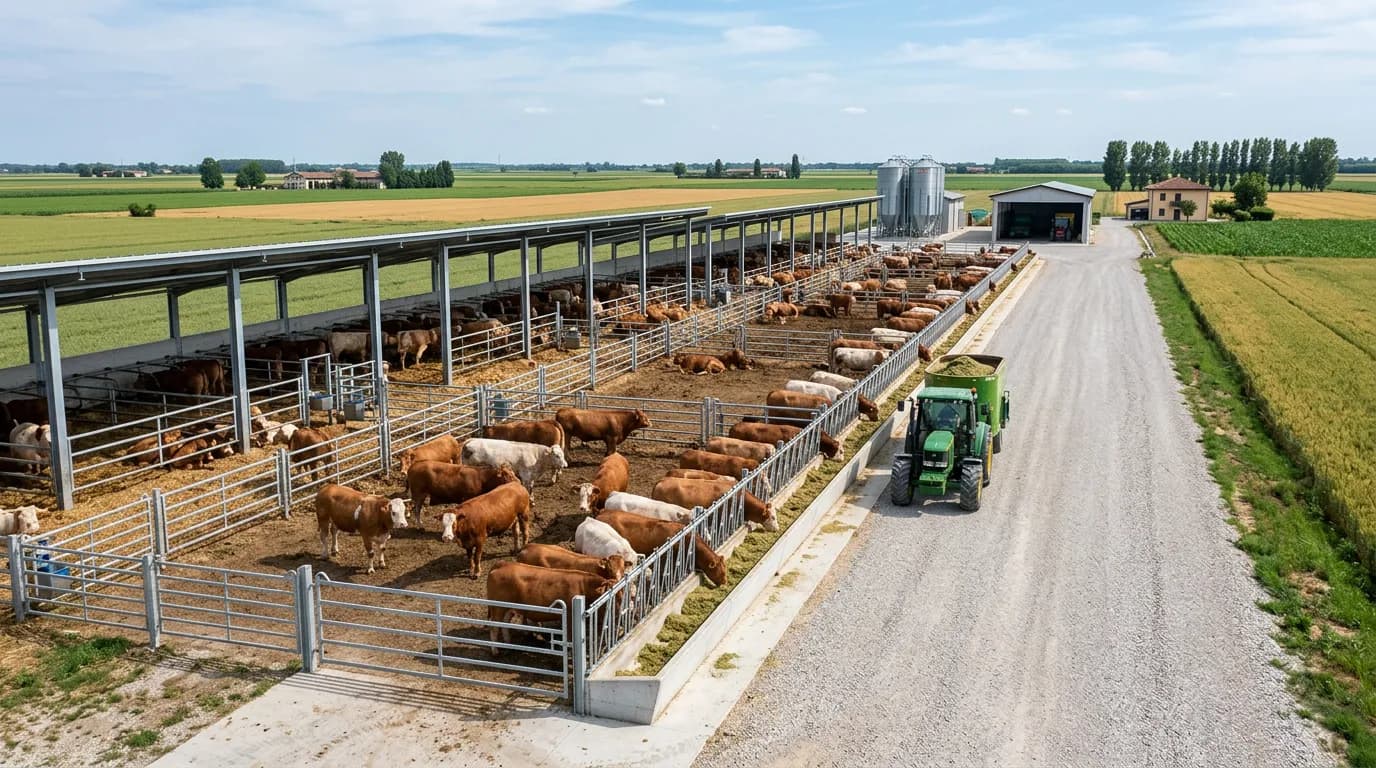
The intensive feedlot is the dominant production system in Italy's cattle fattening sector, accounting for the vast majority of beef output from the northern fattening regions. In this system, cattle are housed in covered or partially covered barns on slatted floors or deep bedding, and fed a carefully formulated total mixed ration (TMR) designed to maximize growth rate and feed efficiency.
A typical intensive feedlot in northern Italy consists of multiple barn units, each holding 50-200 animals in group pens. Pen design varies, but most operations use either fully slatted concrete floors with slurry storage beneath, or straw-bedded lying areas with a concrete feeding apron. Stocking density is typically 3-4 square meters per animal for finishing cattle, increasing to 4-5 square meters for heavier animals approaching slaughter weight.
Feed delivery in intensive systems is fully mechanized, with mixer wagons preparing and distributing TMR along feed bunks once or twice daily. The TMR formulation is the technical heart of the operation and is typically designed by a nutritionist in consultation with the feedlot operator. Maize silage forms the base of most rations (40-55% of dry matter), supplemented with concentrated energy sources (maize grain, barley, wheat), protein meals (soybean, rapeseed), and mineral-vitamin premixes.
Water supply is provided through automatic drinkers — typically ball-valve troughs — at a rate of at least one drinker per 10-15 animals. Water quality and availability are critical performance factors, as cattle in intensive finishing consume 40-80 liters per day depending on body weight and ambient temperature.
Health management in intensive systems focuses on three key areas: respiratory disease control (the primary health challenge, especially in the first 30 days after arrival), parasitic treatment (deworming on arrival for animals imported from pasture-based systems), and metabolic disorder prevention (acidosis management through careful ration formulation and feed bunk management). Most operations implement a standardized arrival protocol that includes clinical assessment, vaccination (or booster), deworming, and a graduated dietary transition over 2-3 weeks.
Semi-Intensive and Alternative Systems
While intensive feedlots dominate, a notable minority of Italian fattening operations use semi-intensive systems that incorporate elements of outdoor access, pasture, or more extensive management. These systems are more common in Piedmont and parts of Emilia-Romagna than in the Veneto-Lombardy heartland, and are often associated with premium or branded beef programs.
Semi-intensive systems typically house cattle in open-fronted barns with access to outdoor exercise areas or paddocks. Feeding may combine TMR with access to hay or grazing, and stocking densities are generally lower than in fully intensive operations. Growth rates in semi-intensive systems tend to be 10-20% lower than in intensive feedlots due to increased physical activity and lower energy density of the diet, but proponents argue that meat quality — particularly tenderness and flavor — benefits from the less intensive finishing environment.
Organic beef production represents a small but growing niche within Italy's fattening sector. Organic operations must comply with EU organic regulations (Regulation (EU) 2018/848), which mandate access to outdoor areas, minimum space allowances, restrictions on the use of synthetic feed additives and veterinary medicines, and sourcing of organically certified feed. The organic premium in Italy's retail market can be significant — 30-50% above conventional beef prices — but the higher production costs and lower feed efficiency of organic finishing narrow the margin advantage.
Some fattening operations in mountainous areas of Piedmont and Trentino-Alto Adige use traditional alpine systems where cattle spend summer months on highland pastures before a winter finishing period indoors. These systems produce small volumes of premium beef marketed under local geographical indications and quality schemes.
Regardless of the system used, the fundamental economics of Italian cattle fattening revolve around the same variables: the purchase price of feeder cattle, feed costs, average daily gain, feed conversion efficiency, and the sale price of finished animals. Bovatra's sourcing service is designed to optimize the first of these variables — delivering quality feeder cattle at competitive prices — to give fattening operators the best possible starting point for a profitable finishing cycle.
Preferred Breeds for Fattening
Italian fattening operators show strong breed preferences driven by growth performance, carcass characteristics, and market demand. Understanding these preferences is essential for cattle suppliers seeking to meet the Italian market's requirements.
Charolais is the single most popular breed for Italian fattening operations. Charolais cattle — sourced overwhelmingly from France — combine exceptional growth rates (1.3-1.6 kg ADG in finishing), high feed efficiency, and excellent carcass yield (60-65% dressing percentage). The breed's heavy muscling and lean carcass align perfectly with Italian consumer preferences for lean, tender vitellone beef. Charolais broutards weighing 350-450 kg at 8-12 months of age are the most commonly traded category in the France-Italy pipeline.
Limousin cattle are the second most popular choice, also sourced primarily from France. Limousin offer slightly lower growth rates than Charolais but compensate with exceptional feed efficiency and carcass quality. The breed's fine-boned conformation produces a high meat-to-bone ratio, and Limousin beef is prized for its tenderness and fine grain. Italian buyers often prefer Limousin for operations targeting premium retail and foodservice markets.
Blonde d'Aquitaine is a growing presence in Italian feedlots. This French breed offers extreme muscular development, very high carcass yield (often exceeding 65%), and lean meat quality. Blonde d'Aquitaine animals are particularly valued by operations that sell on a carcass weight basis, where the breed's exceptional dressing percentage translates directly into revenue.
Piemontese is Italy's premier domestic beef breed, concentrated in the Piedmont region. The breed carries the myostatin gene (double muscling), which produces extraordinary muscular development and very lean carcasses. Piemontese beef commands the highest prices in the Italian market but is available in limited quantities compared to imported French breeds.
Holstein-Friesian bull calves from Italy's large dairy sector represent a significant secondary input to the fattening industry. While these animals produce leaner, less muscular carcasses than specialized beef breeds, they are available in large numbers at lower purchase prices. Many Lombardy-based feedlots specialize in dairy bull finishing or operate mixed beef-breed and dairy-breed finishing programs.
Crossbreed animals — particularly Charolais-cross and Limousin-cross cattle from Ireland and the UK — are also traded into the Italian market, typically at a discount to purebred French animals but offering competitive growth performance.
Feeding Programs and Nutrition
The feeding program is the single largest variable cost in Italian cattle fattening — typically representing 60-70% of total production costs — and the primary determinant of growth performance and profitability. Italian feedlot operators have refined their feeding strategies over decades, and the standard approach is well-established.
The total mixed ration (TMR or unifeed) system is used by virtually all Italian feedlots. A TMR combines forages, concentrates, protein sources, and supplements into a single homogeneous mix that is delivered to the feed bunk, preventing animals from sorting individual ingredients and ensuring consistent nutrient intake across the group. TMR preparation uses horizontal or vertical mixer wagons that blend ingredients according to a precise formulation.
A typical finishing ration for beef cattle in Italian feedlots consists of maize silage (40-55% of dry matter) as the primary forage source, providing energy and physically effective fiber. Maize grain — either as dry corn, high-moisture corn, or corn meal — provides additional energy (15-25% of DM). Other cereal grains such as barley, wheat, or sorghum may partially replace maize. Soybean meal is the predominant protein source (8-12% of DM), sometimes supplemented with rapeseed meal, sunflower meal, or distillers' grains. A mineral-vitamin premix (2-4% of DM) supplies calcium, phosphorus, trace minerals, and vitamins A, D, and E.
The dietary transition for newly arrived cattle is a critical management period. Animals imported from French or Irish pasture-based systems arrive accustomed to a forage-based diet. Abrupt transition to a high-energy finishing ration risks ruminal acidosis, reduced intake, and respiratory disease. Standard practice is a step-up program over 14-21 days that gradually increases concentrate proportion from approximately 20% to the target finishing level of 45-55%.
Dry matter intake targets for finishing cattle range from 2.2% to 2.8% of body weight per day, depending on breed, age, and diet energy density. For a 500 kg Charolais bull, this translates to approximately 11-14 kg of dry matter daily. Feed conversion ratios in well-managed Italian feedlots typically range from 5.5:1 to 7:1 (kg feed DM per kg liveweight gain).
Some Italian feedlots incorporate novel feed ingredients or additives to enhance performance. Rumen-protected fats may be added at 2-3% of DM to increase energy density without increasing acidosis risk. Yeast-based products are commonly used during the transition period to support rumen function. The use of growth-promoting hormones is banned in the EU, and Italian feedlots must comply with strict regulations on the use of feed additives and veterinary medicines.
Vitellone Production and Market Requirements
Vitellone — literally 'large calf' — is the Italian term for young bull beef, the primary product of Italy's cattle fattening sector. Understanding the vitellone market and its quality requirements is fundamental to both fattening operators and their cattle suppliers.
Vitellone is defined as beef from young male cattle (bulls or steers, though bulls dominate in Italian production) slaughtered between 12 and 24 months of age. The ideal vitellone carcass weighs 300-450 kg, with excellent muscular development, minimal external fat cover, and pale to light pink meat color. Italian consumers prize vitellone for its tenderness, mild flavor, and leanness — qualities that distinguish it from the more mature, heavily marbled beef preferred in some other markets.
Carcass grading in Italy follows the EU EUROP classification system, which assesses conformation (muscular development) on a scale from E (excellent) to P (poor) and fat cover on a scale from 1 (very lean) to 5 (very fat). The target for most Italian vitellone production is U or R conformation with fat class 2 or 3. Charolais and Limousin cattle routinely achieve U conformation, while Piemontese cattle frequently grade E or U+ due to their extreme muscular development.
Slaughter weight and age vary by breed and market target. Charolais bulls are typically finished at 650-750 kg liveweight (380-480 kg carcass) at 16-20 months of age. Limousin bulls finish at 600-700 kg liveweight (370-450 kg carcass) at 15-19 months. Piemontese bulls may be finished at higher ages (18-24 months) to achieve optimal carcass weight given the breed's slower early growth rate.
The Italian beef market is supplied through a combination of large-scale industrial slaughter operations (primarily in Veneto and Lombardy) and smaller regional abattoirs. Major processors include companies that supply both the domestic retail market (supermarket chains, butcher shops) and export markets. Italy exports a significant volume of processed and cured beef products, though the domestic market absorbs the majority of fresh beef production.
Pricing for finished vitellone is typically quoted on a liveweight or carcass weight basis, with premiums and discounts applied according to conformation grade, fat class, breed, and weight range. Market prices are published weekly by Borsa Merci (commodity exchanges) in major trading centers including Modena, Padova, and Cuneo. Price transparency is relatively high compared to some European markets, which aids both producers and traders in planning and negotiation.
Typical Finishing Periods and Growth Trajectories
The finishing period — the time from arrival at the feedlot to slaughter — is a critical economic variable in Italian cattle fattening. Shorter finishing periods reduce housing and feed costs per animal but may not allow animals to reach optimal slaughter weight. Longer finishing periods increase total feed consumption but achieve heavier carcasses and potentially higher sale values.
For Charolais broutards arriving at 8-12 months of age and 350-450 kg liveweight, the typical finishing period is 4-7 months, depending on the target slaughter weight. With average daily gains of 1.3-1.5 kg in the finishing phase, a Charolais bull arriving at 400 kg can reach 650 kg in approximately 5-6 months. Total feed consumption over this period ranges from 2,500 to 3,500 kg of dry matter per animal.
Limousin cattle follow a similar trajectory but may require slightly longer finishing periods due to marginally lower average daily gains (1.1-1.4 kg/day). A Limousin broutard arriving at 380 kg typically reaches a finishing weight of 620-680 kg in 5-7 months. The trade-off is that Limousin carcasses often command a per-kilogram premium that compensates for the slightly higher feed cost per kilogram of gain.
Blonde d'Aquitaine cattle, with their exceptional muscular development, can achieve similar growth rates to Charolais (1.2-1.5 kg/day) and reach finishing weights of 700-800 kg. Their finishing period from arrival at 400 kg to slaughter at 700 kg is typically 5-7 months.
Holstein-Friesian dairy bulls follow a different trajectory entirely. These animals are typically acquired at much younger ages (2-4 weeks old or 4-6 months old), are raised through a growing phase before entering the finishing phase, and are finished at lighter weights (550-600 kg liveweight) with lower daily gains (1.0-1.2 kg/day) and poorer feed conversion than beef breeds. The total feeding period from acquisition to slaughter may be 12-18 months.
Seasonal patterns influence finishing timelines. Animals arriving in autumn (September-November) — the peak import season — are typically finished for slaughter in spring or early summer, when beef demand is seasonally strong. Animals arriving in spring may be finished for the autumn market. Operators who manage their procurement to align finishing dates with periods of stronger market prices can capture meaningful premiums.
Economic Considerations and Profitability
The economics of cattle fattening in Italy are determined by a relatively simple equation — the margin between the total cost of producing a finished animal and its sale value — but the variables within this equation are numerous and often volatile.
The purchase price of feeder cattle is the largest single cost component, typically representing 50-60% of the total cost of production. For Charolais broutards, this price has ranged from EUR 3.00 to EUR 4.50 per kilogram liveweight in recent years, depending on supply conditions, seasonal demand, and individual animal quality. A 400 kg Charolais broutard at EUR 3.50/kg represents a purchase cost of EUR 1,400 per head. Transport costs from France to Italy add approximately EUR 80-150 per head.
Feed costs represent the second-largest component, typically 25-35% of total production costs. At a feed conversion ratio of 6:1 and a feed cost of approximately EUR 0.25-0.35 per kilogram of TMR dry matter, the feed cost to add 250 kg of liveweight over a 5-month finishing period is approximately EUR 375-525 per head. This figure is highly sensitive to cereal and soybean prices, which can fluctuate significantly year to year.
Other costs include veterinary care and medicines (EUR 20-40 per head), labor (highly variable depending on operation size and mechanization), housing depreciation and maintenance, manure management, and administrative overhead. Total non-feed, non-purchase costs typically range from EUR 80 to EUR 150 per head for a 5-month finishing period.
Revenue is determined by the finished weight and the sale price per kilogram. A Charolais bull finished at 680 kg liveweight, sold at EUR 2.80-3.20 per kilogram liveweight, generates gross revenue of EUR 1,904-2,176 per head. Against total costs of approximately EUR 1,900-2,100 per head (purchase + feed + other costs), the margin per head typically ranges from breakeven to EUR 200 in normal market conditions.
This thin margin structure means that profitability in Italian cattle fattening is highly sensitive to three key variables: the purchase price of feeder cattle, feed costs (particularly maize and soybean prices), and the sale price of finished animals. Operators who can secure feeder cattle at competitive prices gain a meaningful advantage. Bovatra's sourcing network and market knowledge are specifically designed to deliver this advantage to our clients.
Seasonal Patterns and Procurement Planning
Italy's cattle fattening industry follows seasonal patterns driven by the breeding cycles of source countries, consumer demand for beef, and the operational rhythms of feedlot management. Understanding these patterns is essential for optimizing procurement timing and maximizing profitability.
The primary import season for broutards from France runs from September through December. This aligns with the weaning of spring-born calves in France's cow-calf operations, which produces the largest annual supply of feeder cattle. Prices during this period follow a characteristic curve: relatively lower in September as supply builds, rising through October and November as Italian buyers compete for the best quality, and easing slightly in December as the holiday season reduces trading activity.
A secondary import peak occurs in March through May, when autumn-born French calves reach weaning age. This spring wave is typically smaller in volume than the autumn peak but can offer pricing advantages for buyers who have the capacity to take delivery outside the main season.
Irish imports follow a somewhat different pattern, with the main supply window running from August through November. Irish cattle — typically older and heavier than French broutards — may include both weanlings and store cattle at varying stages of development.
On the demand side, Italian beef consumption shows seasonal peaks around Easter (traditionally a strong beef market), summer grilling season, and the Christmas holiday period. Feedlot operators plan their finishing cycles to bring animals to slaughter weight during or slightly before these demand peaks, when market prices are typically strongest.
Seasonal weather patterns also influence feedlot operations. Summer heat stress in the Po Valley can reduce cattle intake and growth performance, particularly in July and August when temperatures frequently exceed 35 degrees Celsius. Operations with good ventilation and cooling systems mitigate this impact but cannot eliminate it entirely. Winter finishing generally produces better growth performance due to lower heat stress, though cold, damp conditions increase the risk of respiratory disease.
Bovatra advises clients on optimal procurement timing based on current market conditions, seasonal supply forecasts, and each operation's specific finishing capacity and target market. By aligning purchases with favorable supply conditions and targeting finish dates to coincide with strong demand periods, operators can meaningfully improve their annual profitability. Contact us to discuss a tailored procurement plan for your operation.
Source Cattle for Fattening
Related Guides
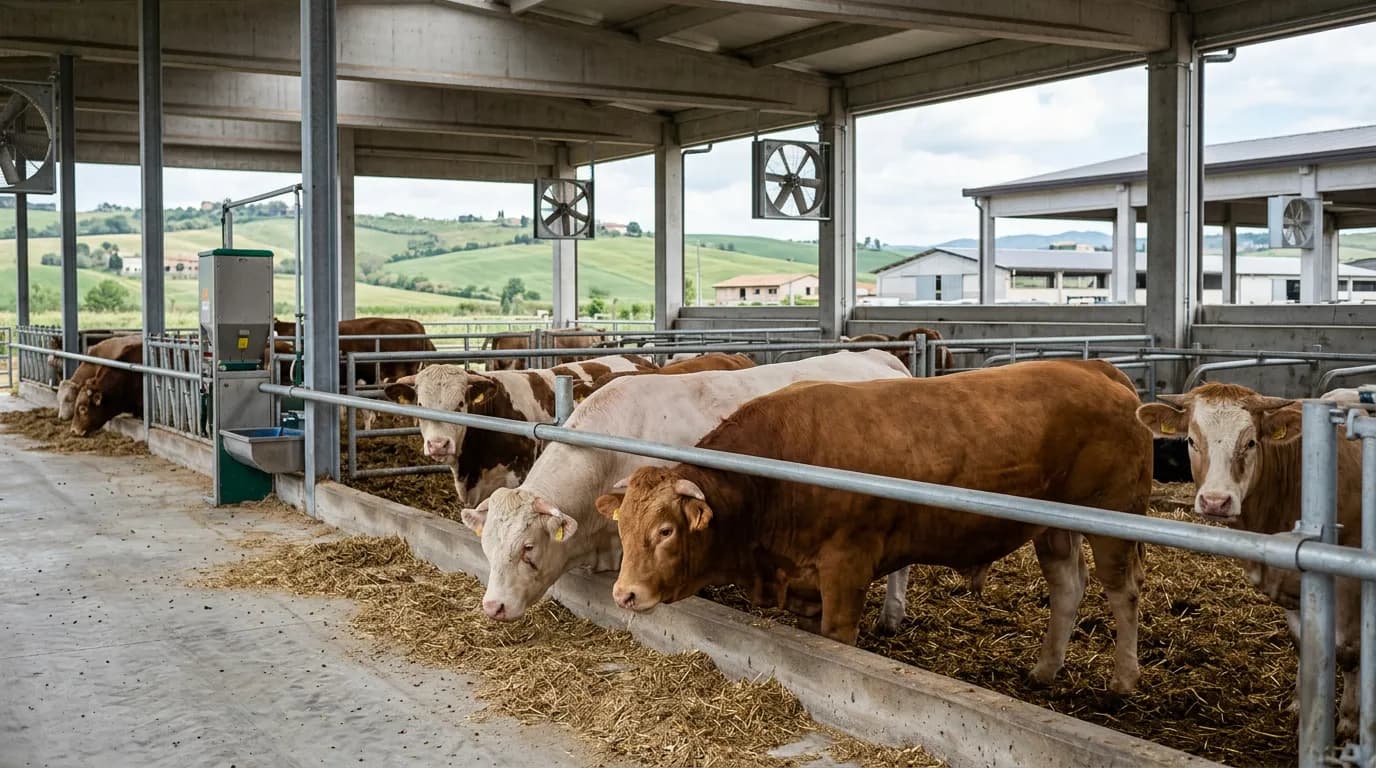
How to Choose the Right Cattle Breed for Fattening in Italy
A practical decision guide for Italian fattening operations — comparing breeds by growth rate, feed efficiency, carcass yield, and market premiums to help you choose the right cattle for your system.

Charolais Cattle Breed Guide: Characteristics, Feeding & Sourcing
Everything professional buyers need to know about Charolais cattle — from breed characteristics and growth performance to sourcing from France and transport to Italy.
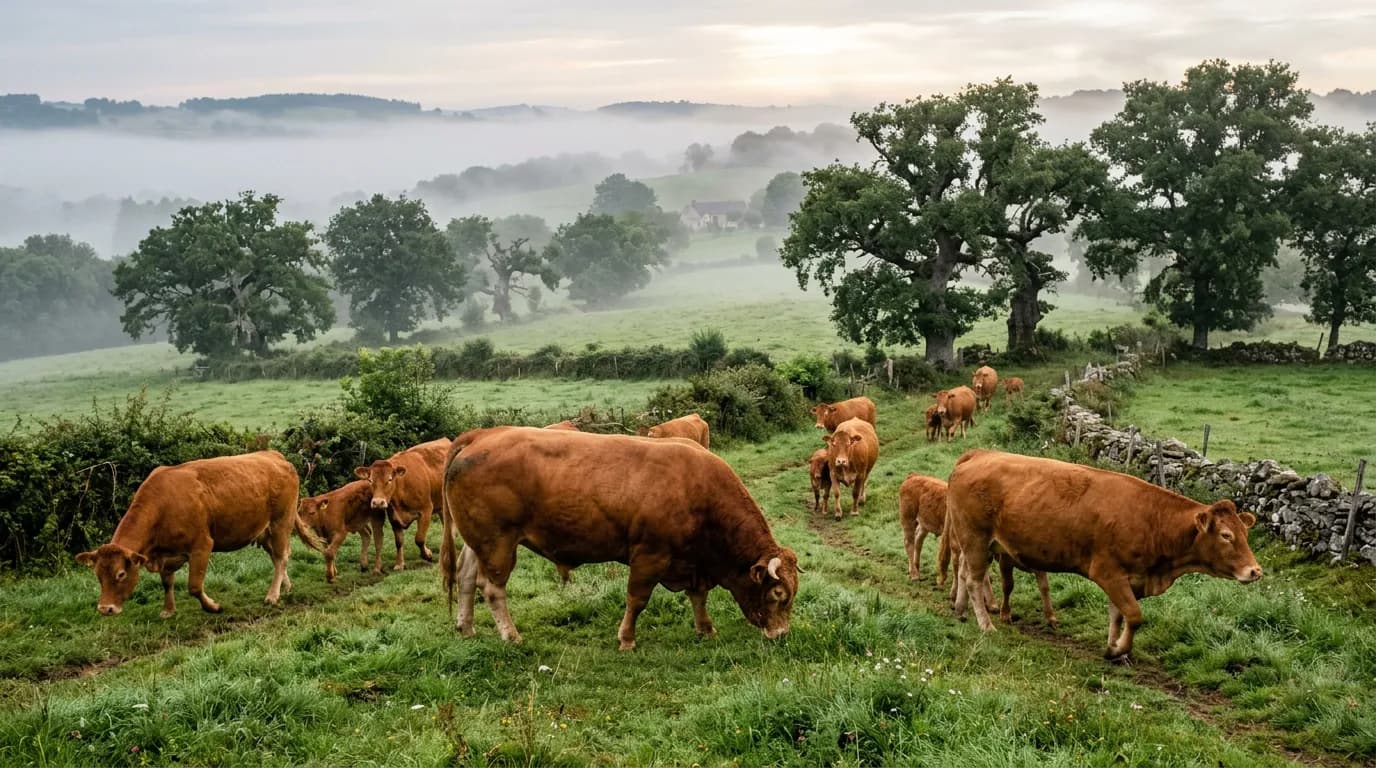
Limousin Cattle Breed Guide: Traits, Care & Buying Tips
A comprehensive guide to Limousin cattle for professional buyers — covering breed traits, lean meat profile, feed efficiency, sourcing from France, and transport logistics to Italy.
Ready to Source Livestock — or List Your Stock?
Whether you are a buyer looking for specific breeds or a seller seeking reliable access to European buyers, Bovatra manages the full transaction cycle.