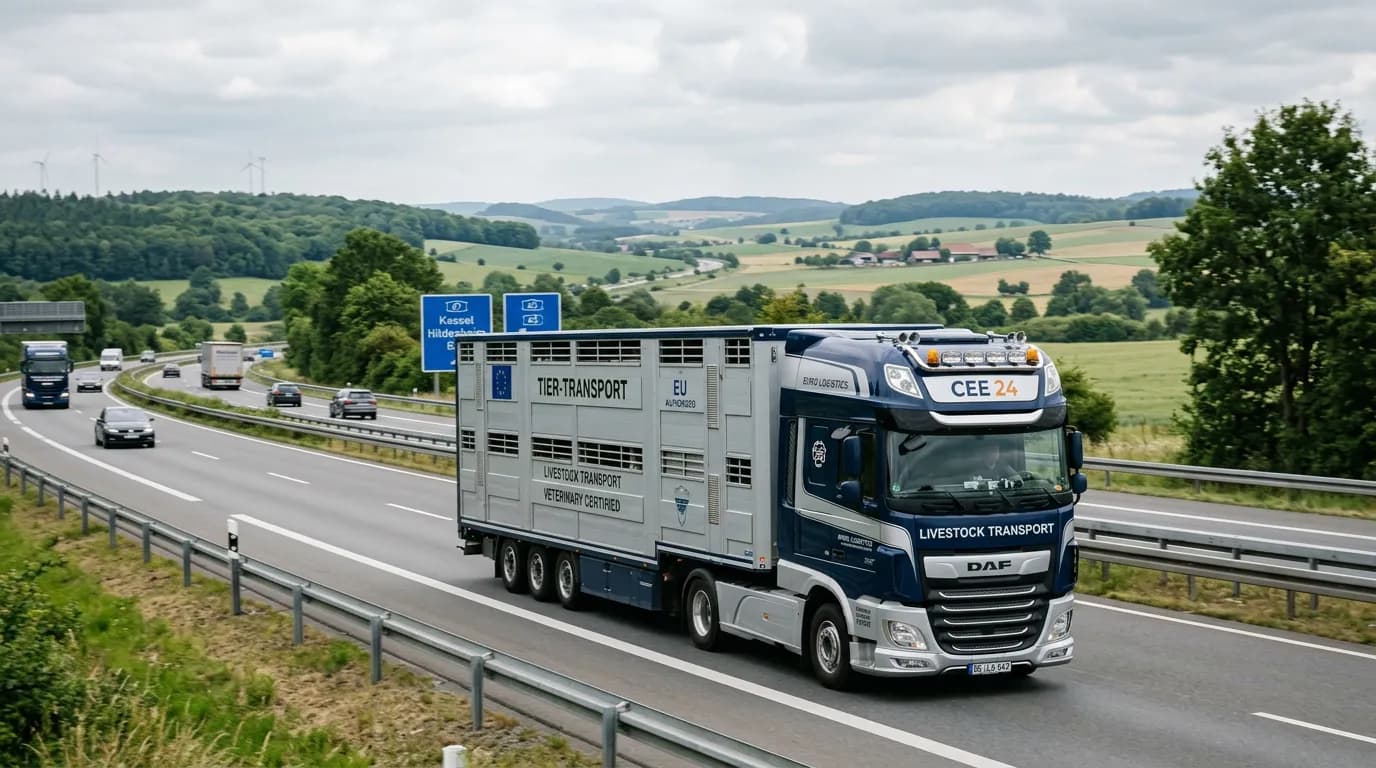
EU Livestock Transport Regulations: Complete Guide to Regulation 1/2005
A comprehensive guide to EU Council Regulation (EC) No 1/2005 on the protection of animals during transport — covering journey time limits, vehicle standards, documentation requirements, and practical implications for cross-border cattle trade.
Table of Contents
Introduction to EU Livestock Transport Regulation
Council Regulation (EC) No 1/2005 on the protection of animals during transport is the cornerstone of EU legislation governing the movement of live animals within and between EU Member States. Adopted on 22 December 2004 and applicable from 5 January 2007, this regulation replaced the earlier Directive 91/628/EEC and established a comprehensive framework of rules designed to protect animal welfare during commercial transport operations.
For professional livestock buyers and traders operating in the European cattle market, thorough understanding of Regulation 1/2005 is not optional — it is a fundamental requirement for legal, compliant, and commercially successful operations. Non-compliance can result in severe penalties including fines, suspension of transport authorizations, seizure of animals, and criminal prosecution. Beyond the legal consequences, failure to comply with transport welfare standards causes animal suffering, increases transport losses, and damages the commercial reputation of the businesses involved.
This guide provides a detailed overview of Regulation 1/2005 as it applies to the transport of cattle — the most commonly traded livestock species in European cross-border commerce. We cover the regulation's scope, journey time limits, rest period requirements, vehicle standards, loading density rules, fitness for transport criteria, documentation obligations, enforcement mechanisms, and the practical implications for buyers and traders operating in the EU livestock market. Throughout, we focus on the provisions most relevant to the cross-border cattle trade between France, Germany, Austria, Ireland, and Italy.
Scope and Applicability
Regulation 1/2005 applies to the transport of live vertebrate animals carried out in connection with an economic activity. This encompasses virtually all commercial livestock movements, including the transport of cattle for sale, slaughter, breeding, fattening, exhibitions, and any other commercial purpose. The regulation applies throughout the European Union and to animals entering or leaving the EU territory.
The regulation distinguishes between several categories of transport based on journey duration, each triggering different levels of regulatory requirements. Short journeys of up to 8 hours are subject to the basic provisions of the regulation, including general welfare requirements, fitness for transport checks, and basic documentation. Long journeys exceeding 8 hours trigger additional requirements including enhanced vehicle specifications, detailed journey logs, mandatory rest and feeding intervals, and specific training requirements for drivers and attendants.
Certain limited exemptions exist. The regulation does not apply to the transport of animals by farmers using their own vehicles for distances up to 50 km from their holding, or to transport carried out by farmers for seasonal transhumance. However, these exemptions are narrowly defined and do not apply to the vast majority of commercial cattle movements that professional buyers and traders handle.
A critical point for cross-border operators is that Regulation 1/2005 applies uniformly across all EU Member States, establishing a single set of rules for livestock transport throughout the Union. This means that the same standards apply whether cattle are being transported within France, from France to Italy, from Ireland to Italy, or across any other combination of EU Member States. While national authorities are responsible for enforcement — and enforcement intensity can vary between countries — the legal requirements themselves are harmonized.
For non-EU countries that trade livestock with the EU, the regulation requires that animals imported into the EU must have been transported under conditions at least equivalent to those set out in the regulation. This provision is particularly relevant for livestock trade with countries such as the United Kingdom (post-Brexit) and Switzerland.
Journey Time Limits and Rest Periods
The journey time and rest period provisions of Regulation 1/2005 are among its most operationally significant requirements for cattle transporters. These rules define maximum continuous travel times, mandatory rest intervals, and the conditions under which rest must be provided.
For cattle, the basic journey time rules are structured as follows. For journeys of up to 8 hours, cattle may be transported continuously without a mandatory rest stop, provided that the general welfare conditions of the regulation are met — including adequate ventilation, water access where needed, and appropriate loading density. This 8-hour threshold is the dividing line between short and long journeys.
For long journeys exceeding 8 hours, the regulation establishes a detailed framework of travel and rest intervals. Cattle may be transported for a maximum of 14 hours, after which they must receive a rest period of at least 1 hour during which they are given water and, if necessary, fed. After this rest, transport may resume for a further 14 hours. After a total journey time of 29 hours (including the 1-hour rest), animals must be unloaded, given food, water, and a rest period of at least 24 hours at an approved control post before the journey may continue.
These time limits are critical for planning cross-border cattle movements. For example, a typical journey from central France to northern Italy covering 800-1,200 km can usually be completed within the 29-hour maximum, often within 14-20 hours of actual driving time. However, longer routes — such as from Ireland to Italy, which may exceed 2,000 km — will typically require at least one mandatory 24-hour rest stop at an approved control post.
The regulation also imposes special provisions for unweaned calves. Young calves that are still on a milk diet must be given a rest period of at least 1 hour after 9 hours of transport, during which they must receive liquid and, if necessary, fed. After this rest, they may travel for a further 9 hours before the 24-hour mandatory rest applies.
It is important to note that journey time is measured from the moment the first animal is loaded onto the vehicle until the last animal is unloaded at the destination — not from departure to arrival. This means that loading and unloading times are included in the total journey duration, a point that must be factored into route planning and scheduling.
Vehicle Standards and Equipment Requirements
Regulation 1/2005 establishes detailed requirements for vehicles used to transport livestock, with enhanced specifications for vehicles undertaking long journeys exceeding 8 hours. These standards are designed to ensure that animals are transported in conditions that protect their welfare throughout the journey.
All vehicles used for livestock transport must meet basic requirements including sufficient floor area and height for the animals being transported, adequate ventilation that maintains appropriate temperature and air quality regardless of whether the vehicle is moving or stationary, non-slip flooring that minimizes the risk of animals falling, and robust construction that prevents animals from escaping or falling out. The vehicle must also be designed to allow inspection and care of animals during the journey, and must be capable of being cleaned and disinfected effectively after each use.
For long journeys exceeding 8 hours, vehicles must meet additional specifications that go significantly beyond the basic requirements. These include a roof that provides effective protection against weather conditions, a mechanical ventilation system capable of maintaining adequate temperature and air flow regardless of external conditions, a temperature monitoring system with a recording device that is accessible to the driver, a water supply system that enables the driver to provide water to each animal at any time during the journey, and a navigation or positioning system (GPS) that records and stores journey data including departure time, location, and duration.
The navigation system requirement is particularly significant from a compliance perspective. Regulation 1/2005 requires that long journey vehicles be equipped with a satellite navigation system that records the vehicle's position at regular intervals. This data must be stored for at least three years and made available to competent authorities on request. The GPS data serves as an objective record of the actual journey, enabling authorities to verify compliance with journey time limits and route plans.
Partition systems within the vehicle must be appropriate to the species and size of animals being transported. For cattle, partitions must be strong enough to withstand the animals' weight and movements, and must be positioned to prevent animals from being thrown during acceleration, braking, and cornering. The regulation does not specify exact partition intervals, but the general requirement for adequate space and welfare protection implies that partitions should create manageable group sizes.
Vehicle inspections and certifications are managed by the competent authorities of each Member State. Vehicles used for long journeys must hold a certificate of approval issued by the competent authority of the Member State in which the vehicle is registered. This certificate confirms that the vehicle meets all the enhanced specifications required for long-distance livestock transport.
Loading Density Requirements
The regulation specifies minimum space allowances for cattle during transport, expressed in square metres per animal. These loading density requirements are designed to ensure that animals have sufficient space to maintain a natural standing position, and to allow adequate ventilation and access to water facilities.
For cattle, the minimum space allowances are determined by the approximate weight of the animal. The regulation specifies the following standards: for animals weighing approximately 55 kg, a minimum of 0.30-0.40 m² per animal; for animals of approximately 110 kg, 0.40-0.70 m²; for approximately 200 kg, 0.70-0.95 m²; for approximately 325 kg, 0.95-1.30 m²; for approximately 550 kg, 1.30-1.60 m²; and for animals weighing 700 kg or more, a minimum of 1.60 m² or more per animal. These figures provide ranges because the exact space requirement depends on the specific size, body condition, and horn status of the animals, as well as the journey duration and weather conditions.
In practice, these loading density requirements directly determine the number of animals that can be transported on a single vehicle. A standard livestock trailer with approximately 40 m² of usable floor area can typically accommodate 25-30 cattle weighing 300-400 kg, or 20-25 cattle weighing 500-600 kg. However, the actual loading capacity depends on the specific vehicle configuration, partition placement, and the characteristics of the animals being loaded.
The regulation states that loading density may need to be increased (i.e., fewer animals per vehicle) in certain circumstances, including transport in extreme weather conditions (hot or cold), long journeys where animals need to lie down, and transport of horned cattle (which require more space than polled animals). Conversely, the regulation permits a slight increase in density for very short journeys under specific conditions, though this flexibility is rarely applied in cross-border trade.
Overloading is one of the most commonly identified welfare violations in livestock transport enforcement. Competent authorities across the EU routinely check loading densities during roadside inspections and at destination control points. Overloaded vehicles are subject to immediate action, which may include requiring animals to be unloaded, issuing fines, suspending the transporter's authorization, and reporting the violation to the authorities in the transporter's home Member State.
For professional buyers and transporters, maintaining correct loading density is both a legal obligation and a practical necessity. Overcrowded animals are more likely to be injured during transport, experience greater stress, lose more body weight, and require longer recovery periods after arrival — all of which negatively impact the commercial value of the consignment.
Fitness for Transport
Regulation 1/2005 establishes clear criteria for determining whether animals are fit to be transported. The fitness for transport assessment is a critical welfare safeguard and a legal prerequisite that must be completed before any animal is loaded onto a transport vehicle.
The regulation specifies that no animal shall be transported unless it is fit for the intended journey. Animals are considered unfit for transport if they are unable to move independently without pain or to walk unassisted, if they present a severe open wound or prolapse, if they are pregnant females for whom 90% or more of the expected gestation period has already passed (or females who have given birth in the preceding seven days), if they are newborn mammals in which the navel has not completely healed, or if they are pigs of less than three weeks, lambs of less than one week, and calves of less than ten days of age (unless the journey is less than 100 km).
For cattle specifically, the fitness assessment should evaluate the animal's ability to bear weight on all four limbs and walk normally, the absence of visible injuries, wounds, or signs of disease, the animal's general body condition (animals in very poor condition may not be fit for transport), the absence of signs of advanced pregnancy, the animal's respiratory condition (animals with laboured breathing or signs of respiratory disease should not be transported), and the presence of any swellings, abnormalities, or conditions that could worsen during transport.
The fitness for transport assessment must be carried out by a competent person — typically the official veterinarian who issues the health certificate, or a trained person designated by the transporter. The assessment should be performed immediately before loading, and its results documented. If an animal is found to be unfit during the journey, the regulation requires that it receive appropriate care and, if necessary, be separated from other animals and given veterinary treatment or emergency slaughter.
For professional buyers, the fitness for transport requirement has direct commercial implications. Animals that are not fit for transport cannot legally be shipped, which can disrupt procurement schedules and transport logistics. Ensuring that animals meet fitness criteria before purchase — or including appropriate contractual provisions that address fitness — is an important aspect of professional livestock procurement.
Documentation and Journey Logs
Regulation 1/2005 imposes comprehensive documentation requirements for livestock transport, with particular emphasis on long journeys exceeding 8 hours. These requirements serve multiple purposes: ensuring traceability, facilitating enforcement, and providing a record of the conditions animals experienced during transport.
For all commercial livestock transport, the following basic documentation must accompany the consignment: an animal transport certificate (or equivalent document) identifying the animals, their origin, and destination; a health certificate issued by the official veterinarian at the place of origin (required for all cross-border movements within the EU); the transporter's authorization number; and the driver's certificate of competence.
For long journeys exceeding 8 hours, additional documentation requirements apply in the form of a detailed journey log. The journey log is a standardized document (specified in Annex II of the regulation) that must be completed by the organizer of the journey before transport begins. It consists of several sections covering planning information (origin, destination, planned route, estimated journey time, rest stops), declaration by the transporter confirming vehicle compliance, the place and time of departure, and a record of checks carried out at the place of departure.
During the journey, the journey log must be updated to record the actual times and locations of rest stops, any animal welfare incidents, and the actual arrival time at each stop point and at the final destination. After the journey, the destination section must be completed, confirming arrival time and the condition of the animals upon arrival.
The journey log must be submitted to the competent authority at the place of departure for approval before the journey begins. For cross-border movements, this is typically handled through the TRACES (Trade Control and Expert System) platform, which enables electronic notification and approval of livestock movements between Member States.
Driver certification is another important documentary requirement. All persons handling animals during transport — including drivers, attendants, and persons involved in loading and unloading — must hold a certificate of competence issued by the competent authority of a Member State. This certificate is obtained by completing an approved training course and passing an examination covering animal welfare legislation, the physiological needs of animals during transport, practical handling techniques, emergency procedures, and the effects of driving behaviour on animal welfare.
For professional buyers, the documentation requirements of Regulation 1/2005 represent a significant administrative obligation. However, when managed effectively — as Bovatra does for all its transactions — proper documentation ensures regulatory compliance, provides a clear audit trail, and protects all parties in the supply chain.
Enforcement and Penalties
Enforcement of Regulation 1/2005 is the responsibility of the competent authorities of each EU Member State — typically the national veterinary authority or the food safety agency. While the regulation itself is uniform across the EU, enforcement practices, inspection frequencies, and penalty structures vary between Member States.
Enforcement activities take several forms. Roadside inspections involve competent authorities stopping and inspecting livestock vehicles in transit to check documentation, loading density, animal welfare, vehicle compliance, and journey log records. Destination checks occur when animals arrive at their destination (slaughterhouse, farm, market, or assembly centre), where the competent authority verifies documentation, assesses the condition of the animals, and checks for any signs of welfare compromise during transport. Systematic checks through TRACES allow the competent authorities to monitor livestock movement notifications and identify patterns of non-compliance. Random audits of transporters, including examination of GPS records, journey logs, and vehicle maintenance records, provide retrospective verification of compliance.
Penalties for non-compliance vary between Member States but can be substantial. Common penalties include financial fines, which range from several hundred to several thousand euros per infringement depending on the severity and the Member State. Suspension or revocation of the transporter's authorization prevents the business from operating until compliance is restored. Seizure or detention of animals may occur where there is an immediate welfare concern, with authorities requiring animals to be unloaded, rested, fed, and watered at the transporter's expense. Criminal prosecution may apply in cases of serious or repeated welfare violations, with potential imprisonment for responsible individuals.
Several Member States have implemented specific enforcement programs targeting livestock transport. Italy's competent authority (the Ministero della Salute) conducts systematic destination checks on imported cattle, with particular attention to loading density, journey times, and the condition of animals upon arrival. France's Direction Générale de l'Alimentation (DGAL) operates a national inspection program for outgoing livestock consignments. These enforcement activities are supported by EU-level coordination through the European Commission's Directorate-General for Health and Food Safety (DG SANTE).
For professional operators, maintaining rigorous compliance is both a legal obligation and a commercial imperative. A history of transport violations can result in enhanced scrutiny from competent authorities, increased inspection frequency, and reputational damage that affects business relationships across the supply chain.
Recent Developments and Proposed Reforms
The regulatory landscape for livestock transport in the EU is evolving. Regulation 1/2005 has been the subject of extensive review and debate since its implementation, with growing calls from animal welfare organizations, the European Parliament, and some Member States for stricter standards.
In 2023, the European Commission published a proposal to revise the EU's animal welfare legislation, including the rules on animal transport. Key elements of the proposed revisions include reduced maximum journey times for cattle, with proposals to limit transport to slaughter to a maximum of 9 hours (compared to the current 29-hour framework), stricter temperature limits during transport, with proposed prohibitions on transport when external temperatures exceed 30 degrees Celsius or fall below minus 5 degrees Celsius, enhanced space allowances that would increase the minimum floor area per animal, new rules for the transport of unweaned calves that would set a minimum age of 5 weeks before calves can be transported on long journeys, and mandatory use of real-time welfare monitoring systems including temperature and positioning data.
These proposals remain subject to the EU legislative process, which involves negotiation between the European Commission, the European Parliament, and the Council of Ministers (representing Member States). The timeline for adoption and implementation is uncertain, but the direction of travel is clear — EU livestock transport rules are likely to become more restrictive in the coming years.
The European Parliament has been particularly active on this issue. In 2022, the Parliament's Committee of Inquiry on the Protection of Animals during Transport (ANIT Committee) published a comprehensive report recommending significant strengthening of transport regulations. The European Parliament subsequently adopted a resolution calling for stricter journey time limits, better enforcement, and an end to the export of live animals to non-EU countries where welfare standards cannot be guaranteed.
For professional buyers and traders, these developments have practical implications. Stricter journey time limits could significantly affect the logistics and economics of long-distance cattle movements within the EU. Buyers who currently source cattle from distant origins may need to adapt their procurement strategies — potentially by sourcing from closer origins, utilizing approved control posts more frequently, or adjusting transport schedules to comply with new time limits.
Bovatra monitors regulatory developments closely and advises clients on the implications of proposed changes for their procurement and transport operations. Planning for regulatory evolution is an important aspect of strategic livestock sourcing.
Practical Implications for Cross-Border Cattle Trade
For professional buyers operating in the European cattle market, Regulation 1/2005 is not merely a set of rules to be complied with — it is a framework that shapes the entire logistics of cross-border livestock procurement. Understanding the practical implications of the regulation enables buyers to plan more effectively, manage costs, and ensure that their operations run smoothly.
Route planning is directly influenced by journey time limits and rest period requirements. For cattle movements within the commonly traded corridors — France to Italy, Germany to Italy, Austria to Italy, and Ireland to Italy — journey time limits are the primary constraint. Most France-to-Italy movements can be completed within the 14-hour initial travel period or the 29-hour extended framework. However, Ireland-to-Italy movements typically require at least one 24-hour rest stop, adding 1-2 days to the total delivery schedule and the cost of using an approved control post.
Transport costs are influenced by loading density requirements, vehicle specification standards, and documentation obligations. The cost per head for cross-border cattle transport within the EU typically ranges from EUR 60-200, depending on the distance, number of animals, route complexity, and the specific services required (documentation, veterinary certification, control post arrangements). These costs must be factored into the total landed cost of imported cattle.
Seasonal considerations affect transport planning in ways directly related to the regulation. The proposed (and increasingly enforced by some Member States) temperature restrictions can limit or prohibit transport during summer heat waves and severe winter cold. Buyers sourcing during these periods should plan for potential transport delays and consider the additional costs of temperature-controlled vehicles or overnight transport to avoid peak temperatures.
Animal welfare outcomes during transport directly impact the commercial value of the consignment. Cattle that arrive in good condition — well-rested, properly hydrated, and free from injuries — will begin the finishing period faster, achieve better growth rates, and require fewer veterinary interventions. The investments required to comply with Regulation 1/2005 — proper vehicles, correct loading density, adequate rest stops — pay returns in the form of better post-arrival performance.
Bovatra manages Regulation 1/2005 compliance as an integral part of every livestock transaction. From journey planning and documentation preparation to carrier selection and arrival coordination, we ensure that every cattle movement meets the regulation's requirements — protecting our clients from enforcement risk while delivering animals in the best possible condition.
Discuss Transport Requirements
Related Guides
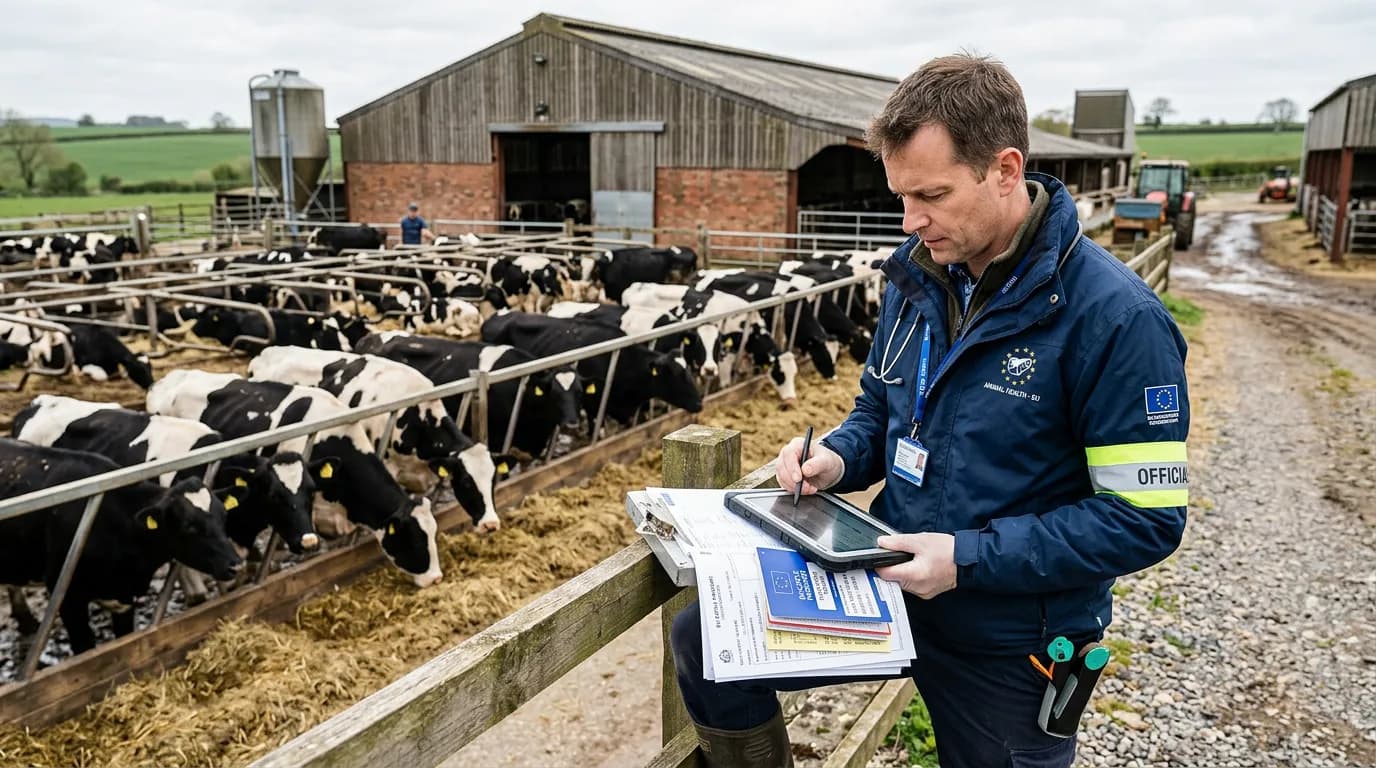
TRACES System Guide: EU Livestock Trade Documentation Explained
A comprehensive guide to the EU TRACES platform — how it works, who needs to use it, notification types, and how Bovatra manages documentation for seamless cross-border cattle trade.

Livestock Health Certificates in the EU: Requirements & Process
A detailed guide to EU health certificate requirements for intra-community cattle trade — covering veterinary inspections, disease testing, quarantine periods, and common rejection reasons.
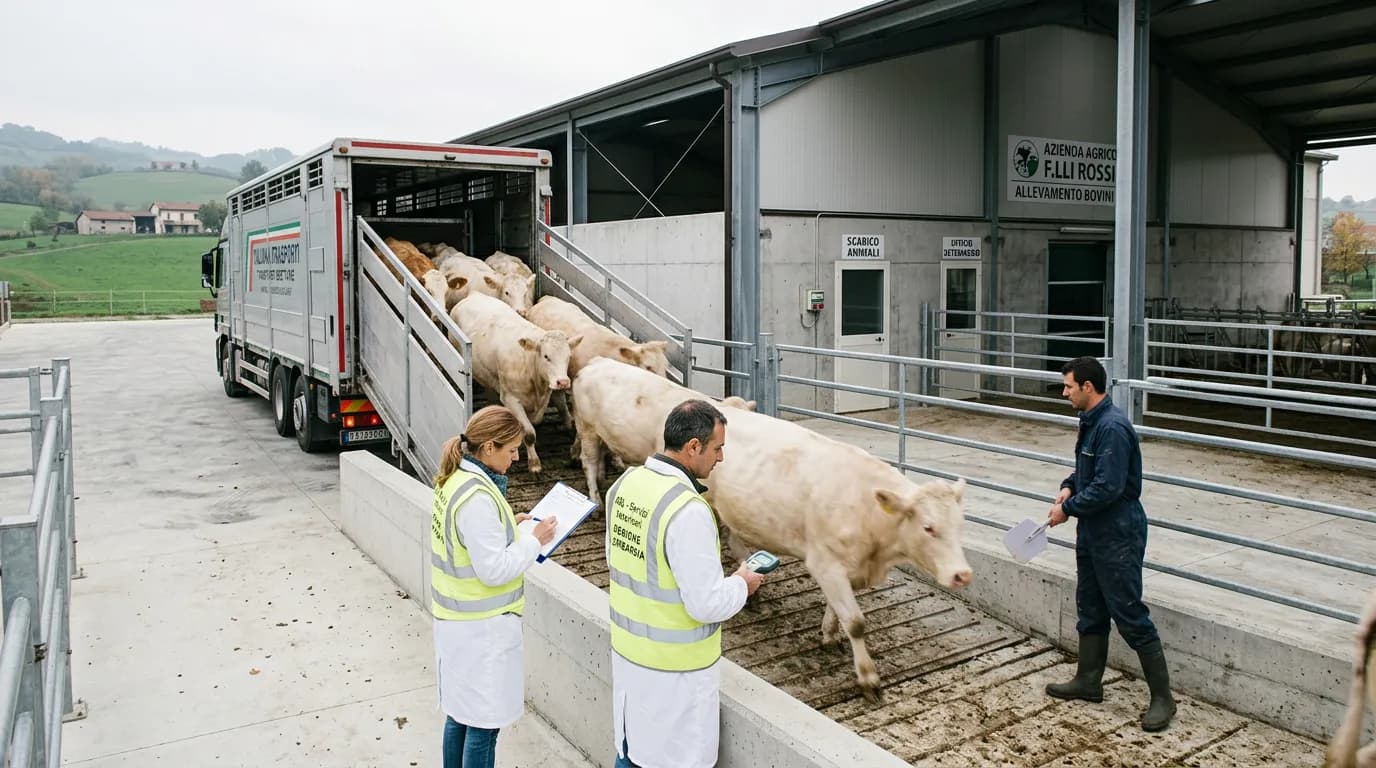
How to Import Livestock to Italy: Complete Buyer's Guide
A step-by-step guide to importing cattle into Italy — covering legal requirements, TRACES notifications, health certificates, border inspections, ASL procedures, and common mistakes to avoid.
Ready to Source Livestock — or List Your Stock?
Whether you are a buyer looking for specific breeds or a seller seeking reliable access to European buyers, Bovatra manages the full transaction cycle.