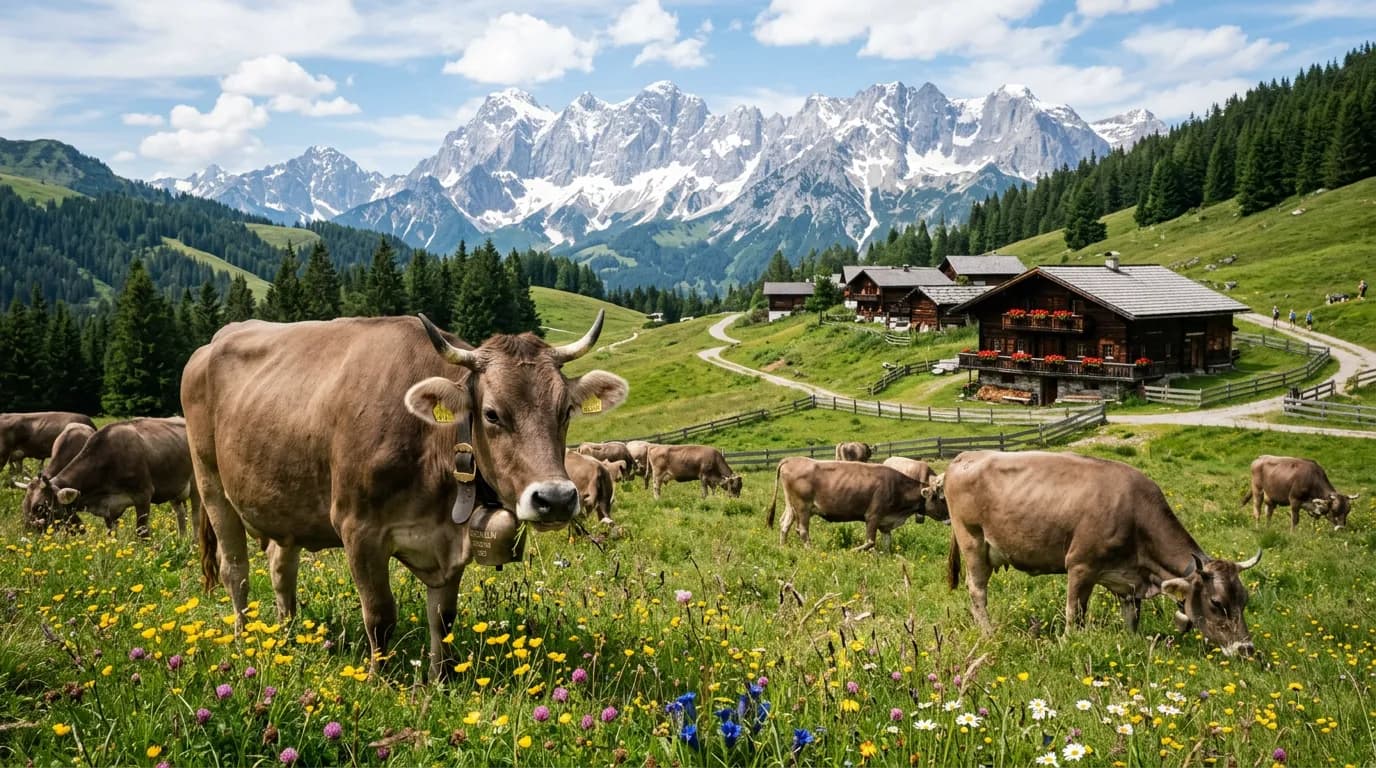
Brown Swiss Cattle Guide: Dual-Purpose Alpine Breed Profile
A complete guide to Brown Swiss cattle for professional buyers — covering dual-purpose characteristics, alpine heritage, dairy and beef performance, sourcing from Austria and Switzerland, and cross-border logistics.
Table of Contents
Introduction to Brown Swiss Cattle
The Brown Swiss is one of the oldest and most versatile cattle breeds in the world. Originating in the Swiss Alps, this breed has been refined over centuries into a dual-purpose animal of exceptional quality, capable of producing both high-value milk and well-finished beef. Known internationally as Brown Swiss and in German-speaking countries as Braunvieh, the breed occupies a unique position in European livestock markets as a genuinely dual-purpose animal that excels in both disciplines.
For professional livestock buyers, the Brown Swiss represents an opportunity that extends beyond simple beef procurement. The breed's dual-purpose nature means that cull cows, surplus heifers, and young bulls from dairy-oriented herds all enter the beef supply chain — often at attractive prices relative to specialist beef breeds. In Alpine regions of Austria, Switzerland, and southern Germany, Brown Swiss cattle form a substantial proportion of the cattle population, creating a stable and consistent supply base for cross-border trade.
This guide provides a comprehensive overview of the Brown Swiss breed for professional buyers — from its Alpine origins and physical characteristics to its performance in both dairy and beef systems, cheese production heritage, sourcing dynamics in Austria and Switzerland, and the logistics of cross-border procurement.
Origin and History
The Brown Swiss breed traces its origins to the central Alps of Switzerland, where archaeological evidence suggests that brown-coated cattle have been raised for at least 4,000 years. The breed's development is inextricably linked to the Alpine farming culture of the Schwyz, Obwalden, and Uri cantons, where the harsh mountain environment demanded cattle that could produce both milk and meat while surviving on steep, rocky pastures at high altitudes.
The first formal breed registry was established in Switzerland in 1897, though selective breeding had been practiced by Swiss farmers for centuries before that date. The breed gained international recognition in the 19th century when exports began to North America (1869), where the breed was developed primarily as a dairy animal, and to other European countries, where the dual-purpose character was maintained.
In Austria, the Brown Swiss — known locally as Braunvieh or Original Braunvieh — has been a cornerstone of Alpine agriculture for centuries. The Austrian Brown Swiss population is centred in the western provinces of Vorarlberg, Tyrol, and Salzburg, where the breed's adaptation to mountain environments makes it the natural choice for farmers operating at elevations above 800 metres. The Austrian herd book, maintained by the Braunvieh Austria breeding association, records approximately 450,000 Brown Swiss cattle in the country.
Swiss breeding programs have maintained the most rigorous dual-purpose selection, ensuring that both milk production and beef conformation receive equal attention. This balanced approach has produced an animal that is genuinely competitive in both disciplines — a rare achievement in modern livestock breeding, where specialization is the dominant trend. The Original Braunvieh strain, preserved in Switzerland, represents the most traditional form of the breed and is particularly valued for its robust constitution and longevity.
Physical Characteristics
Brown Swiss cattle are characterized by their distinctive coat colour, which ranges from light silvery-grey to dark brown, with most animals displaying a warm mousy-brown shade. The coat has a distinctive smoky quality, often appearing lighter on the muzzle, around the eyes, along the topline, and on the inner legs. The muzzle is characteristically dark with a distinctive light ring (mealy muzzle), and the hooves are dark and exceptionally hard — an adaptation to rocky Alpine terrain.
The breed displays a medium to large frame with a well-balanced, dairy-influenced conformation in milk-type animals and a blockier, more muscular build in beef-oriented strains. Mature cows typically weigh 600 to 750 kg, while bulls range from 900 to 1,200 kg. The body is deep and capacious, with a well-attached udder in dairy lines, strong legs, and excellent feet quality.
The head is refined and alert, with a broad forehead and medium-sized, upward-curving horns — though polled genetics are increasingly common. The eyes are large and dark, giving the breed its characteristic gentle expression. The skin is pigmented, providing natural protection against ultraviolet radiation at high altitudes — a significant advantage over light-skinned breeds in mountain environments.
From a buyer's perspective, Brown Swiss cattle destined for beef production should be evaluated for depth of body, width through the loin, muscling in the hindquarter, and overall structural soundness. While Brown Swiss do not match the extreme muscular development of specialist beef breeds, well-fed animals from dual-purpose lines carry a surprising amount of natural muscle, particularly through the hindquarter and loin. The breed's strong skeletal structure and sound feet make it well-suited to both housed finishing systems and outdoor fattening environments.
Dairy Performance and Cheese Heritage
The Brown Swiss is globally recognized as one of the premier dairy breeds, with milk production characteristics that set it apart from other dairy breeds in several important respects. While total milk volume is typically lower than Holstein-Friesian (averaging 7,000-8,500 kg per lactation in well-managed herds), Brown Swiss milk is distinguished by its exceptional composition — particularly its high protein content and favourable casein profile.
Brown Swiss milk typically contains 3.8-4.2% fat and 3.4-3.7% protein, with a notably high proportion of kappa-B casein. This protein variant is associated with superior cheese-making properties, including faster coagulation time, firmer curd formation, and higher cheese yield per litre of milk. These characteristics make Brown Swiss milk the preferred raw material for many of Europe's most prestigious Protected Designation of Origin (PDO) cheeses.
The connection between Brown Swiss cattle and artisan cheese production is particularly strong in the Alpine regions. In Switzerland, Brown Swiss milk is central to the production of Gruyère, Emmental, and Appenzeller cheeses. In Austria, Alpine dairies using Brown Swiss milk produce a range of mountain cheeses that command premium prices. In Italy, the Bruna Italiana (the Italian Brown Swiss strain) is a key breed for Parmigiano Reggiano, Grana Padano, and various Alpine cheese productions.
This cheese heritage is commercially relevant for livestock buyers because it underpins the economic viability of Brown Swiss dairy herds across the Alpine region. Strong dairy economics mean that farmers maintain large herds, generating a consistent supply of surplus animals — young bulls, cull cows, and replacement heifers — that enter the beef supply chain. Understanding the dairy economics that drive Brown Swiss breeding decisions helps buyers anticipate supply patterns and pricing dynamics.
Beef Performance and Carcass Quality
While the Brown Swiss is primarily valued for its dairy contributions, the breed's beef performance is more substantial than many buyers initially expect. Decades of dual-purpose selection in Austrian and Swiss breeding programs have maintained strong growth potential and carcass quality alongside dairy improvement — a deliberate strategy that distinguishes Continental European Brown Swiss from the more dairy-specialized American Brown Swiss strain.
Young Brown Swiss bulls raised in Austrian and Swiss beef production systems typically achieve average daily gains of 1.1 to 1.4 kg per day under intensive finishing conditions. Feed conversion ratios range from 6.5:1 to 8:1 (kg feed per kg gain), which is moderate compared to specialist beef breeds but reflects the breed's dual-purpose genetics. Importantly, these figures improve significantly when Brown Swiss are crossed with terminal beef sires.
Carcass characteristics of finished Brown Swiss cattle include a dressing percentage of 54-58% for purebred animals, with moderate muscling and good fat distribution. The meat is well-regarded for its flavour and tenderness, with moderate intramuscular fat content that produces good eating quality. Carcass conformation typically grades in the O to R range on the EUROP classification system, which is respectable for a dual-purpose breed.
For Italian fattening operations, Brown Swiss cattle offer several practical advantages. Cull dairy cows, typically 5-8 years old and weighing 550-700 kg, can be finished efficiently over a 60-90 day period to produce carcasses suitable for processing markets. Young bulls from dairy herds, available at relatively competitive prices, can be finished to 550-650 kg slaughter weight over a 4-6 month finishing period. Brown Swiss-cross animals, produced by mating Brown Swiss cows with Charolais, Limousin, or other terminal sires, combine the dam breed's robustness with improved muscling and growth rates, often achieving daily gains of 1.2-1.5 kg per day.
Longevity and Functional Traits
One of the Brown Swiss breed's most commercially valuable traits is its exceptional longevity. Brown Swiss cows routinely remain productive for 6-8 lactations, with many individuals reaching 10 or more lactations — significantly longer than the average productive life of Holstein-Friesian cows, which typically average 2.5-3.5 lactations in intensive systems. This longevity reflects the breed's robust constitution, sound feet and legs, and resistance to the metabolic and reproductive disorders that limit productive life in highly specialized dairy breeds.
The practical implications of this longevity for livestock buyers are significant. Longer productive lives mean that Brown Swiss herds generate a more predictable and controllable supply of cull animals. Farmers can select which animals to cull based on productive criteria rather than being forced to replace cows prematurely due to lameness, fertility failures, or metabolic problems. This selectivity tends to produce cull animals that are in better body condition and health status — both of which benefit buyers in the finishing chain.
Fertility is another outstanding functional trait in the Brown Swiss breed. Calving intervals typically average 380-400 days, which is among the best of any dairy breed. Calving difficulty is low, with the vast majority of Brown Swiss calvings occurring without assistance. These fertility characteristics are particularly relevant for buyers involved in breeding programs, where Brown Swiss females offer reliable reproductive performance.
Foot and leg quality in Brown Swiss cattle is widely recognized as superior to most other dairy breeds. The breed's hard, dark hooves — evolved for Alpine terrain — resist wear, laminitis, and infectious hoof diseases far better than the lighter hooves of Holstein-Friesian cattle. This hoof quality is a significant advantage in housed finishing systems where hoof problems can reduce feed intake, growth rates, and overall animal welfare.
Disease resistance is generally good in the Brown Swiss breed, with particular resilience to mastitis (lower somatic cell counts than many dairy breeds) and metabolic disorders. This robust health profile reduces veterinary costs and treatment interventions during the finishing phase, contributing to the overall economic attractiveness of Brown Swiss cattle for beef production.
Alpine Adaptation and Management
The Brown Swiss breed's adaptation to Alpine environments is the product of thousands of years of natural and artificial selection in some of Europe's most demanding agricultural landscapes. This adaptation encompasses not only physical characteristics — hard hooves, strong legs, pigmented skin, thick coat — but also behavioral and metabolic traits that enable the breed to thrive at altitude.
In the Alpine farming systems of Austria and Switzerland, Brown Swiss cattle typically spend 4-5 months of the year on high mountain pastures (Almen in Austrian German) during the traditional transhumance season from late May or June to September or October. This summer grazing period is a cornerstone of Alpine agriculture and plays a critical role in maintaining the breed's hardiness, foraging ability, and overall fitness.
The annual cycle of Alpine Brown Swiss management follows a well-established pattern. Winter housing (November to May) involves barn-based management with hay, silage, and concentrate feeding. The spring transition period (May to June) sees cattle moved gradually to higher pastures. Summer Alpine grazing (June to September) provides free-range grazing on mountain pastures at elevations of 1,000-2,500 metres. The autumn descent (September to October) brings cattle back to valley farms, often accompanied by traditional festivals. This cycle produces animals with excellent fitness, strong immune systems, and the robust constitution that makes Brown Swiss cattle so well-suited to the rigours of cross-border transport.
For buyers, understanding this management cycle is important for procurement planning. The availability of Brown Swiss cattle for purchase varies seasonally, with the highest volumes typically available in late autumn and winter when farmers make culling and sales decisions based on the year's production data. Spring and early summer availability can be more limited as herds are being prepared for or are already on Alpine pastures.
Sourcing Brown Swiss from Austria and Switzerland
Austria and Switzerland are the primary source countries for Brown Swiss cattle in the European livestock trade. Austria's western provinces — Vorarlberg, Tyrol, and Salzburg — concentrate the highest density of Brown Swiss herds, while Switzerland's central cantons remain the breed's ancestral homeland and the source of the highest-quality genetics.
The Austrian livestock market offers professional buyers a well-organized and transparent purchasing environment. Major livestock markets at Innsbruck, Bludenz, and Salzburg handle significant volumes of Brown Swiss cattle throughout the year. These markets operate under strict EU regulatory oversight, ensuring animal welfare compliance, health certification, and traceability. Direct farm purchasing is also widely practiced, with many larger farms accustomed to selling cattle for export.
Switzerland, while not an EU member state, maintains bilateral agreements with the EU that facilitate livestock trade under defined conditions. Purchasing Brown Swiss cattle from Switzerland involves additional documentation requirements compared to intra-EU trade, including specific import permits and veterinary protocols. However, the quality of Swiss Brown Swiss genetics — particularly from the Original Braunvieh strain — often justifies the additional administrative effort for specialist buyers.
Typical purchase categories for Brown Swiss cattle include young bulls for finishing (8-14 months, 300-450 kg), breeding heifers (12-24 months), cull dairy cows for short-term finishing (550-700 kg), and crossbred store cattle (Brown Swiss dam x beef sire). Pricing for Brown Swiss cattle is generally competitive with other dual-purpose breeds in the region, with young bulls and cull cows often available at lower prices per kilogram than specialist beef breeds.
Bovatra maintains sourcing networks across Austria's Brown Swiss heartland and can facilitate procurement from Swiss farms where buyer requirements dictate. Our experience with Austrian livestock markets and veterinary procedures ensures smooth, efficient transactions for cross-border buyers.
Transport and Cross-Border Logistics
Transporting Brown Swiss cattle from Austria to Italy benefits from geographic proximity and well-established transport corridors through the Alps. The typical journey from western Austria (Vorarlberg/Tyrol) to northern Italy covers 300-600 km, with transit times of 5-10 hours — well within the EU regulation's 29-hour maximum for cattle transport without extended rest.
The Brenner Pass corridor (A13/A22 motorway) is the most commonly used route for livestock transport from Austria to Italy, offering a modern, high-capacity road link between Innsbruck and the Italian regions of Trentino-Alto Adige, Veneto, and Lombardy. Alternative routes through the Resia Pass or via Switzerland and the Simplon/Gotthard tunnels may be used depending on the origin and destination points.
Brown Swiss cattle are generally excellent travellers, with their Alpine heritage providing natural tolerance for the temperature changes and altitude variations encountered during trans-Alpine transport. The breed's calm temperament — Brown Swiss are widely recognized as one of the most docile cattle breeds — further reduces transport stress and the risk of injuries during loading, transit, and unloading.
All transport must comply with EU Council Regulation (EC) No 1/2005. Key requirements include EU-authorized vehicles with appropriate ventilation, non-slip flooring, and adequate space allocations (1.3-1.6 m² per animal depending on weight). For journeys exceeding 8 hours, enhanced vehicle specifications and journey logs are required. Health certification and TRACES notification must be completed before departure.
The relatively short transport distances between Austrian and Italian Brown Swiss markets represent a significant logistical advantage compared to sourcing from more distant origins. Shorter journey times mean less transport stress, lower transport costs per head, reduced weight loss during transit, and faster adaptation upon arrival. These factors all contribute to a favourable total cost of procurement for Brown Swiss cattle from Austria.
Bovatra coordinates the complete transport process for Austrian Brown Swiss cattle, including carrier arrangement, documentation preparation, and delivery scheduling to align with buyer requirements.
Specialist Buyer Requirements and Considerations
Purchasing Brown Swiss cattle for beef production requires a somewhat different approach than sourcing specialist beef breeds. Because Brown Swiss cattle originate primarily from dairy-oriented herds, buyers need to understand the specific considerations that apply to dual-purpose breed procurement.
Animal selection criteria for Brown Swiss destined for finishing should prioritize body condition and frame size (selecting animals with good depth and width), structural soundness (particularly feet and legs, though this is generally a breed strength), health status (current vaccination records, disease testing, and veterinary history), and age and weight relative to the intended finishing program. For cull cows, body condition scoring is particularly important — cows in moderate condition (BCS 2.5-3.0 on the 1-5 scale) offer the best potential for economical finishing.
Diet transition planning is important when moving Brown Swiss cattle from Alpine dairy systems to Italian finishing operations. Animals accustomed to forage-based Alpine diets require careful, gradual introduction to higher-energy finishing rations. A 3-4 week adaptation period with progressive concentrate introduction is recommended to avoid digestive disorders.
Housing requirements for Brown Swiss cattle in finishing systems are relatively straightforward. The breed adapts well to both slatted-floor systems and straw-bedded yards. Their calm temperament makes them easy to manage in group housing, and their social nature means they settle quickly into established groups. Space allowances should follow EU welfare standards — typically 3.5-5.0 m² per animal in fully housed systems.
Market positioning for Brown Swiss beef should consider the breed's meat characteristics. While carcass conformation may not reach the top grades achieved by specialist beef breeds, Brown Swiss beef is well-regarded for eating quality, with good flavour and tenderness. Buyers targeting quality-focused or niche market channels may find that Brown Swiss beef commands premium prices from discerning consumers and processors.
Why Consider Brown Swiss for Your Operation
The Brown Swiss breed offers professional livestock buyers a distinctive combination of qualities that can complement or diversify a cattle procurement strategy. While the breed may not suit every operation, it presents compelling advantages in specific contexts.
Cost-effective sourcing is a primary attraction. Because Brown Swiss cattle originate mainly from dairy herds, surplus animals — particularly young bulls and cull cows — are often available at prices below those of equivalent-weight specialist beef breed animals. This price advantage can significantly improve the economics of fattening operations, especially when combined with the breed's efficient feed utilization and low health costs.
Geographic proximity between Austrian Brown Swiss sources and Italian fattening destinations offers logistical advantages that are difficult to match. Transport distances of 300-600 km translate into lower transport costs, reduced transit time, less animal stress, and faster adaptation — all factors that directly impact the profitability of the fattening cycle.
The breed's exceptional longevity and functional traits mean that Brown Swiss cattle arrive at fattening operations in reliably good health. Sound feet, strong legs, and robust immune systems reduce the veterinary interventions and adaptation losses that can erode margins with less hardy breeds.
Supply stability is another key consideration. The large and stable Brown Swiss population in Austria and Switzerland, sustained by strong dairy economics, provides a consistent and predictable supply base for Italian buyers. Unlike specialist beef breeds, where supply can fluctuate significantly with market conditions, the dairy-driven Brown Swiss supply chain offers greater consistency.
For buyers looking to diversify their procurement beyond traditional French beef breeds, or for those seeking cost-effective cattle for specific finishing programs, Brown Swiss cattle from Austria represent an option well worth exploring. Contact Bovatra to discuss your specific requirements and learn how Brown Swiss cattle can fit into your sourcing strategy.
Source Brown Swiss Cattle
Related Guides
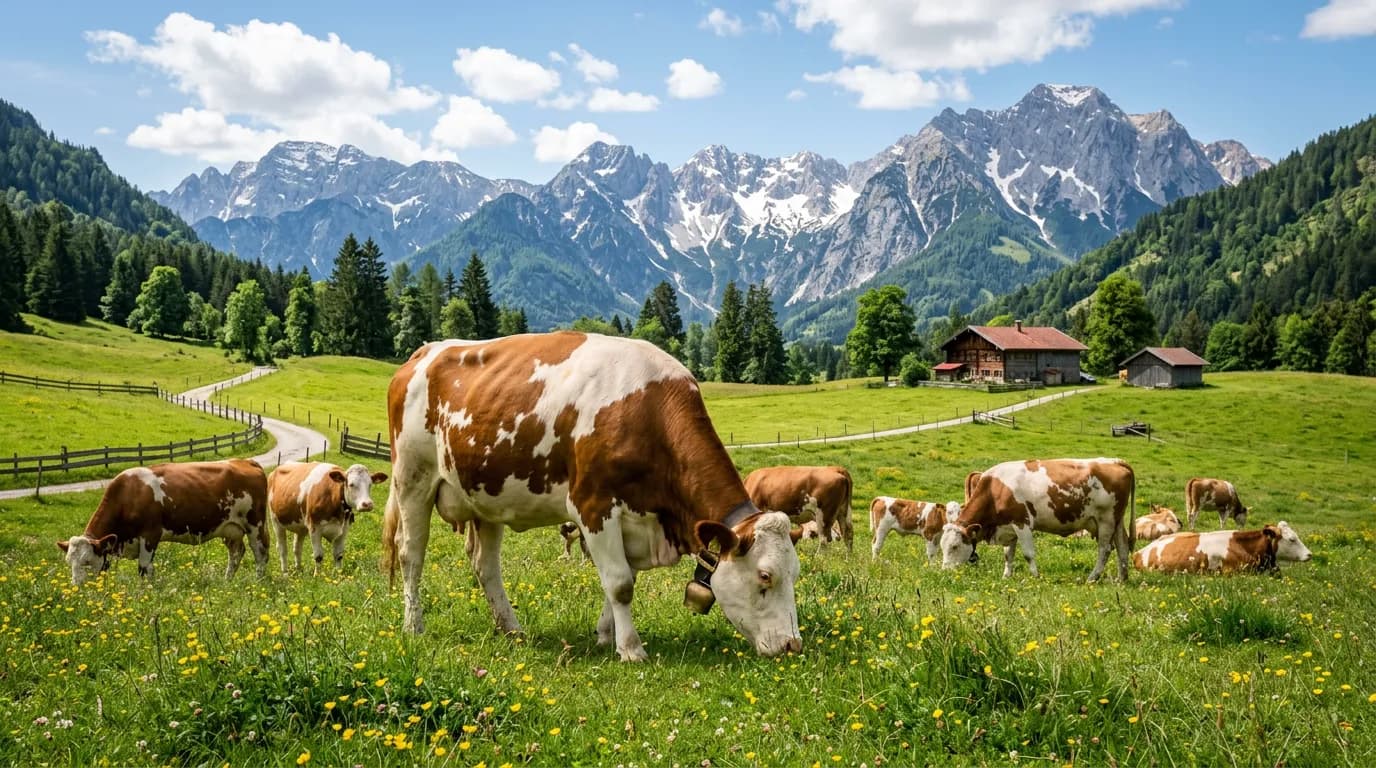
Simmental (Fleckvieh) Cattle Guide: Dual-Purpose Breed Profile
A comprehensive guide to Simmental (Fleckvieh) cattle for professional buyers — dual-purpose breed traits, fattening performance, German and Austrian sourcing, and transport logistics to Italy.
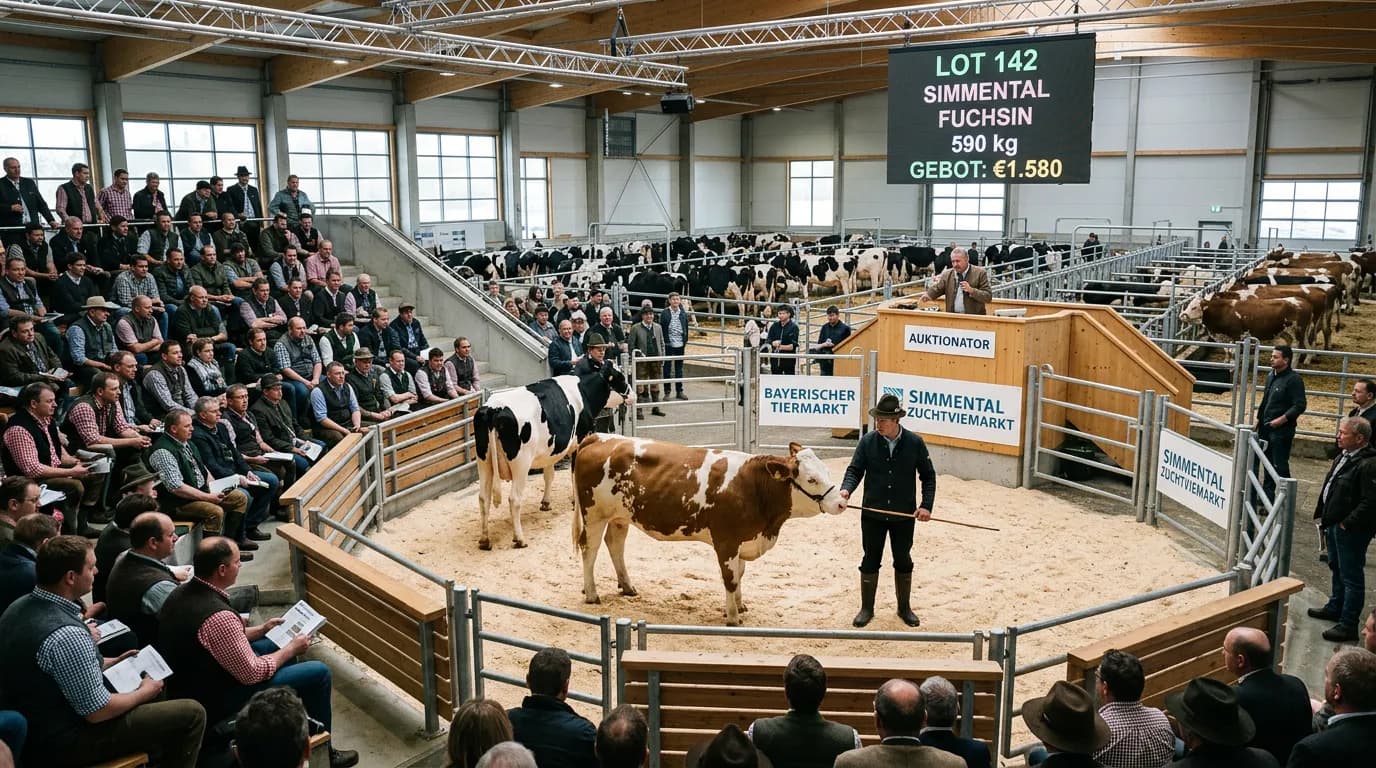
Buying Cattle From Germany: Simmental, Holstein & Sourcing Guide
A complete guide to sourcing cattle from Germany and Austria — covering key breeds, auction systems, regional differences, quality standards, export documentation, and transport routes to Italy.
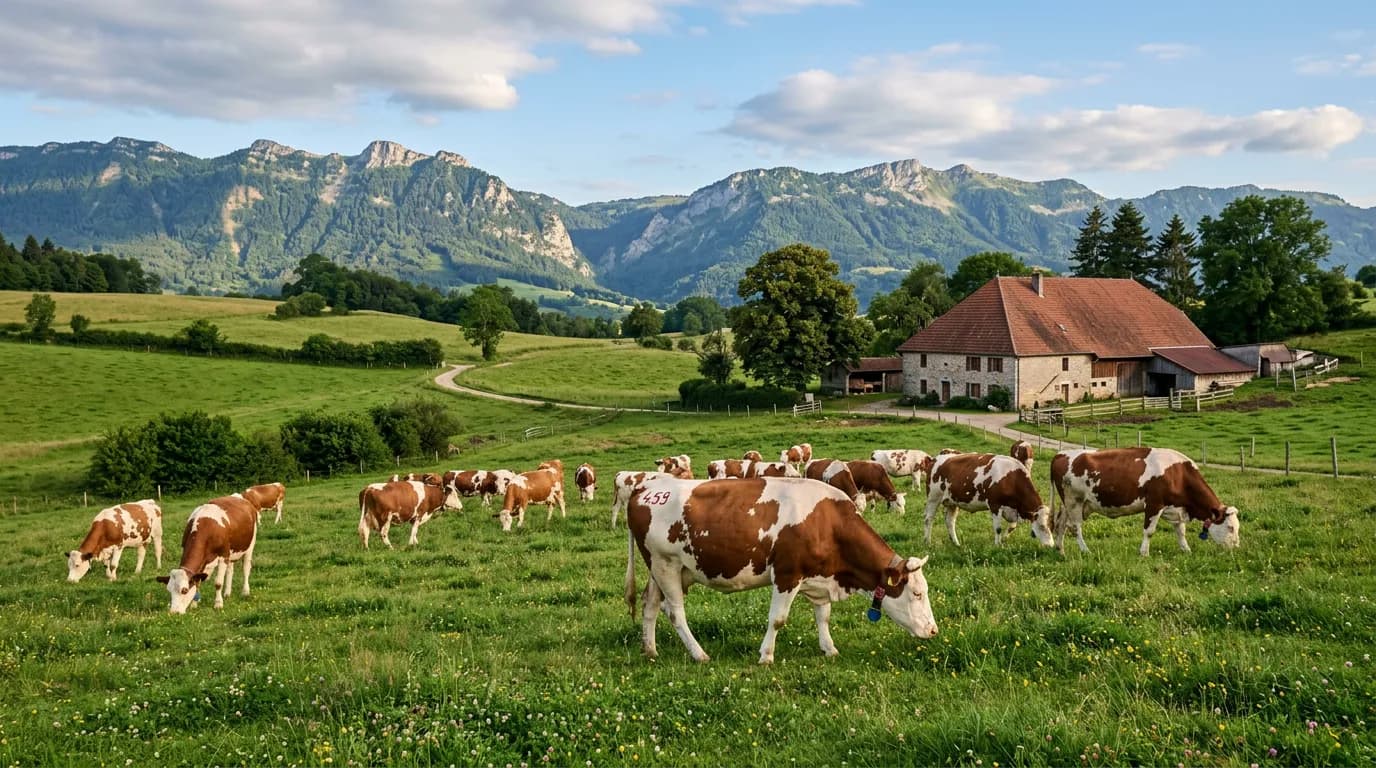
Montbeliarde Cattle Guide: French Dual-Purpose Breed
A comprehensive guide to Montbeliarde cattle for professional buyers — covering breed characteristics, dual-purpose performance, Comté cheese heritage, continental genetics, and sourcing from France.
Ready to Source Livestock — or List Your Stock?
Whether you are a buyer looking for specific breeds or a seller seeking reliable access to European buyers, Bovatra manages the full transaction cycle.