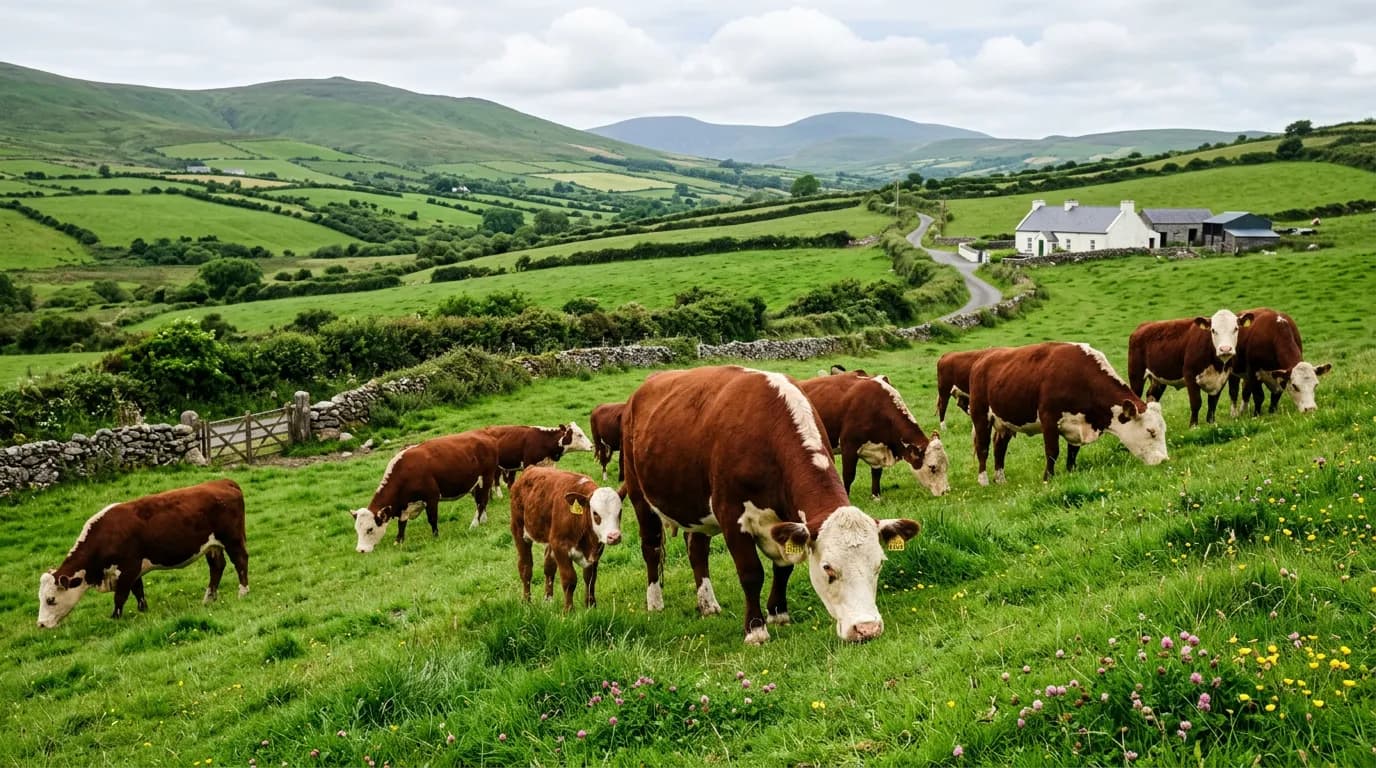
Hereford Cattle Breed Guide: Hardy Performance & Sourcing
A complete guide to Hereford cattle for professional buyers — covering breed characteristics, grass-based performance, beef quality, Irish sourcing, and cross-border procurement for Italian fattening operations.
Table of Contents
Introduction to Hereford Cattle
The Hereford is one of the world's oldest and most widely distributed beef cattle breeds, prized for its hardiness, docile temperament, and ability to thrive on grass-based systems with minimal inputs. With its unmistakable red body and white face, the Hereford has become a symbol of quality beef production across five continents and remains a cornerstone breed in many European livestock markets.
For professional livestock buyers — particularly those sourcing cattle for Italian fattening operations — the Hereford offers a distinctive value proposition. While it may not match the extreme muscular development of Continental breeds like Charolais or Limousin, the Hereford compensates with exceptional feed efficiency on forage-based diets, consistent beef quality, maternal strength, and a temperament that simplifies handling and reduces stress-related losses during transport and adaptation.
Ireland serves as the primary European source market for Hereford cattle destined for Continental fattening operations. The breed is deeply embedded in Ireland's grass-based livestock system, and Irish Herefords represent a reliable and well-characterized supply stream. This guide covers the breed's history, physical traits, performance characteristics, sourcing from Ireland, and the practical considerations for integrating Hereford cattle into diversified procurement programs.
Breed Origin and History
The Hereford breed originated in the county of Herefordshire in the West Midlands of England during the 18th century. The breed's development is attributed to several pioneering farmers, most notably Benjamin Tomkins, who began systematic selection around 1742, focusing on producing cattle that were efficient converters of grass to beef. The Tomkins family, along with other Herefordshire breeders, developed the distinctive red-bodied, white-faced type that became the breed's trademark.
The first Hereford herd book was established in 1846, formalizing the breed's identity and enabling systematic genetic improvement. By the mid-19th century, Herefords were being exported to many countries. The breed reached North America in the early 1800s and quickly became the dominant range cattle breed across the Great Plains — a testament to its hardiness and ability to thrive with minimal management on extensive grasslands.
In Ireland, the Hereford has been a significant presence since the 19th century. The breed's adaptability to Ireland's temperate, rain-rich climate and extensive grassland systems made it a natural fit. Today, the Hereford is one of the most popular suckler cow breeds in Ireland, with the Irish Hereford Breed Society maintaining an active herd book and genetic improvement program. Ireland's Hereford population provides a deep and consistent pool of animals for both domestic finishing and export markets.
The breed has also given rise to the Polled Hereford, a naturally hornless variant developed in the early 20th century. Polled Herefords have gained popularity due to reduced handling risks and welfare concerns associated with dehorning. Both horned and polled types are commercially available from Irish sources.
Physical Characteristics and Conformation
The Hereford's physical appearance is among the most distinctive of any cattle breed. The breed is characterized by a rich, dark red coat covering the body, with a white face, white chest, white belly stripe, and white lower legs. The white face marking is highly heritable and typically appears in crossbred progeny, making Hereford influence easily identifiable in commercial herds.
In terms of frame and conformation, the Hereford is a medium-to-large breed with a well-balanced, rectangular body shape. Mature cows typically weigh 550-700 kg, while bulls range from 900-1,100 kg. The breed exhibits a thick, muscular neck, deep chest with well-sprung ribs, a broad and level back, and well-developed hindquarters. The overall impression is one of compact strength and substance rather than the extreme length and angularity seen in some Continental breeds.
The Hereford's hide is notably thick and pliable — an adaptation that contributes to the breed's legendary hardiness in harsh weather conditions. The hair coat grows long and dense in winter and sheds smoothly in spring, enabling the breed to adapt to a wide range of climates from the cold, wet conditions of the British Isles to the heat of subtropical regions.
From a buyer's perspective, the Hereford's conformation translates into good carcass characteristics for the quality beef market. Dressing percentages typically range from 56-60%, somewhat lower than heavily muscled Continental breeds but competitive within the British breed category. The meat is well-marbled, with consistent fat cover that enhances eating quality — a characteristic that aligns well with markets that value flavor and tenderness over extreme leanness.
When selecting Hereford cattle for purchase, buyers should evaluate structural soundness, particularly in the legs and feet, adequate depth and width of body, good muscling through the loin and hindquarter, and appropriate condition for the animal's age and management history. Animals with excessively heavy bone, steep shoulder angles, or weak pasterns should be avoided.
Temperament and Handling Advantages
One of the Hereford's most valued characteristics is its docile and calm temperament. Among beef cattle breeds, Herefords are consistently rated as one of the easiest to handle, and this behavioral trait has significant practical and economic implications for livestock buyers and fattening operators.
Docile cattle are easier and safer to work with during routine management procedures including loading, transport, veterinary treatments, and pen moves. They adapt more quickly to new environments, resume normal feeding behavior sooner after transport, and exhibit fewer injuries from aggressive interactions with pen mates. For fattening operations that manage large numbers of animals, these behavioral advantages translate into meaningful reductions in labor requirements, handling injuries, and stress-related health issues.
The temperament advantage is particularly relevant in the context of cross-border livestock trade, where animals must endure the sequential stresses of gathering, loading, long-distance transport, unloading, and adaptation to an entirely new environment. Breeds with excitable or nervous temperaments often experience higher rates of dark-cutting beef (a quality defect caused by pre-slaughter stress that depletes muscle glycogen), reduced feed intake during adaptation, and increased susceptibility to respiratory disease.
Hereford cattle typically resume normal feeding patterns within 2-3 days of arrival at a new facility, compared to 4-7 days for more temperamental breeds. This faster adaptation period directly affects feed conversion and growth performance during the critical first weeks in a fattening operation, where early setbacks can compromise the entire finishing program.
For Italian fattening operators accustomed to working primarily with Continental breeds, the Hereford's temperament represents a welcome management advantage. Facilities designed for handling Charolais or Limousin cattle will more than accommodate the calmer Hereford, and the reduced stress environment benefits all animals in the operation.
Growth Performance and Beef Quality
The Hereford's growth performance reflects its heritage as a grass-based beef breed rather than an intensively finished Continental type. Under typical European finishing conditions, Hereford steers and young bulls achieve average daily gains of 1.0-1.3 kg per day, with feed conversion ratios of 6.5:1 to 8:1 depending on the management system and diet composition. These figures are somewhat lower than those of large Continental breeds but competitive within the medium-frame British breed category.
Where the Hereford truly distinguishes itself is in feed efficiency on forage-based and moderate-energy diets. The breed's evolutionary adaptation to grassland environments has produced cattle that extract maximum nutritional value from roughage, making them particularly efficient in systems where grass silage, hay, or pasture forms a significant portion of the diet. This characteristic can reduce feed costs in operations that do not rely exclusively on high-energy concentrate-based rations.
Beef quality is a standout characteristic of the Hereford breed. The meat displays consistent intramuscular fat deposition (marbling), which enhances flavor, juiciness, and tenderness. In taste panels and quality assessments, Hereford beef regularly scores highly for eating quality, and several premium beef programs around the world are built specifically around the breed — including Certified Hereford Beef programs in multiple countries.
Carcass characteristics for finished Hereford cattle typically include dressing percentages of 56-60%, EU conformation grades of R to U (depending on the individual and feeding program), and fat class scores of 3 to 4L. The fat cover is generally more uniform than in dairy-origin cattle, contributing to better carcass presentation and more consistent processing characteristics.
For Italian markets that value quality and consistency — including branded beef programs, quality-focused retail chains, and premium food service channels — Hereford beef offers a differentiated product. While the Italian market has traditionally favored lean, heavily muscled beef from Continental breeds, growing consumer interest in flavor and eating quality is creating opportunities for well-finished Hereford product.
Hardiness and Adaptability
The Hereford breed's legendary hardiness is not merely a marketing claim — it is a demonstrable biological advantage that has real economic implications for livestock buyers and managers. Developed over centuries in the variable climate of western England, the Hereford has been further tested and proven in environments ranging from the harsh winters of Canada and Patagonia to the heat of Australia and the tropics.
Key components of the Hereford's hardiness include a thick, weather-resistant hide and coat that provides excellent insulation against cold and wet conditions. The breed demonstrates strong foraging instinct and the ability to maintain body condition on lower-quality pastures and roughage. Herefords are known for their disease resistance and general constitution, exhibiting fewer health problems under extensive management compared to many other breeds. They also possess excellent hoof structure and leg conformation that reduces lameness incidence, particularly in outdoor systems.
For buyers importing cattle across EU borders, hardiness translates into practical advantages during the transport and adaptation process. Hardy breeds typically experience lower mortality and morbidity rates during transit, recover more quickly from transport stress, and adapt more readily to new housing and feeding systems. These advantages reduce the economic risk associated with cross-border livestock procurement.
The Hereford's adaptability also extends to feeding system flexibility. While the breed performs well in intensive finishing systems — responding to high-energy rations with good growth rates and carcass quality — it is equally at home in semi-intensive or extensive systems. This versatility allows buyers to place Hereford cattle in a variety of finishing environments, from fully housed feedlot operations to outdoor systems with access to pasture.
In the Italian context, Hereford cattle adapt well to the fattening conditions found in the Po Valley and surrounding regions. The breed's ability to handle both the hot summers and cold, damp winters of northern Italy without significant welfare or performance issues makes it a practical choice for year-round finishing operations.
Sourcing Hereford Cattle from Ireland
Ireland is the natural and primary source market for Hereford cattle destined for Continental European fattening operations. The breed is deeply established in Ireland's predominantly grass-based suckler system, with Hereford and Hereford-cross cattle representing a significant share of the national beef herd. Ireland's mild, grass-growing climate produces Hereford cattle that are well-grown, healthy, and adapted to outdoor management — characteristics that translate well to finishing systems across Europe.
The Irish Hereford market offers several sourcing categories relevant to Italian buyers. Store cattle at 12-18 months weighing 350-500 kg are available for finishing programs, representing the most common procurement category. Younger weanlings at 8-12 months weighing 250-380 kg are suitable for longer growing and finishing programs. Finished cattle at 18-24 months weighing 550-650 kg are available for those seeking animals closer to slaughter readiness.
Irish livestock markets provide transparent and competitive purchasing environments for Hereford cattle. Major marts handling significant Hereford volumes include those in the traditional cattle-producing regions of the midlands and west of Ireland. The Irish livestock marketing system operates primarily through live auction, with animals typically presented in lots sorted by breed type, weight, and age.
The Irish export infrastructure for live cattle is well-developed, with approved assembly centers, export health certification facilities, and experienced livestock transport operators. Irish veterinary authorities maintain rigorous health standards for export cattle, including testing for tuberculosis, brucellosis, and other notifiable diseases. Ireland's disease-free status for several conditions (including BVD eradication progress) provides additional health assurance for buyers.
Seasonality affects the availability and pricing of Hereford cattle from Ireland. The primary marketing period for store cattle runs from August through December, following the summer grazing season. Weanling sales concentrate in the September-November period. Prices typically peak during periods of strong export demand and limited supply in early spring.
Bovatra maintains active sourcing relationships across Ireland's Hereford-producing regions, enabling efficient procurement of animals matching specific buyer requirements for weight, age, breed type, and conformation.
Transport and Logistics Considerations
Transporting Hereford cattle from Ireland to Italy involves specific logistical considerations that differ from shorter-haul routes within Continental Europe. The journey requires sea transport across the Irish Sea (or direct from Irish ports to Continental Europe), followed by road transport through the UK or via direct shipping to French or Belgian ports, and then onward road haulage to Italy.
The total journey from Ireland to northern Italy typically covers 1,800-2,200 km and spans 36-48 hours including sea crossings and mandatory rest periods. All transport must comply with EU Council Regulation (EC) No 1/2005 on the protection of animals during transport. For journeys exceeding 8 hours, detailed journey logs, approved vehicle specifications, and rest period protocols are mandatory.
Sea transport adds a unique dimension to the logistics chain. Livestock vessels operating between Ireland and Continental Europe are purpose-built and approved for animal transport, with controlled ventilation, feeding and watering facilities, and veterinary supervision capabilities. The sea crossing itself typically takes 18-24 hours depending on the route (e.g., Rosslare to Cherbourg, or Dublin to Liverpool followed by road transport).
The Hereford's docile temperament and hardiness are genuine advantages during the multi-modal transport process. Calm animals load and unload more efficiently, are less prone to injury during sea crossings, and recover more quickly from the cumulative stress of the journey. Transport mortality and morbidity rates for Hereford cattle are typically lower than for more excitable breed types.
Documentation for Ireland-to-Italy cattle shipments includes TRACES notification and health certificates, export health testing results (TB, brucellosis), transport authorization and journey log, and customs documentation (post-Brexit, specific requirements apply if routing through the UK). Bovatra manages the complete documentation and logistics chain for Ireland-sourced cattle, coordinating sea bookings, road transport, veterinary certification, and border clearance to ensure smooth and compliant delivery.
Crossbreeding Value and Commercial Applications
The Hereford's value extends beyond purebred production into a significant role as a crossbreeding sire and dam breed. The breed's ability to transmit its key traits — hardiness, docility, and feed efficiency — to crossbred progeny makes it a popular choice in commercial breeding programs across Europe and worldwide.
The most notable crossbreeding characteristic of the Hereford is the dominance of its white face marking, which is passed to virtually all first-cross progeny regardless of the other breed involved. This high-visibility trait has given rise to the colloquial term 'baldies' for Hereford crosses, particularly Hereford-Angus crosses (known as 'black baldies'), which are among the most commercially successful beef crossbreds in the world.
Hereford-Angus crosses combine the hardiness and maternal traits of the Hereford with the carcass quality and market acceptance of the Angus, producing calves that are moderate in frame size, easy calving, and well-suited to both grass-based and feedlot finishing systems. These crossbred animals are widely available from Irish sources and represent an excellent option for Italian buyers seeking quality-focused beef production.
Hereford-Continental crosses — particularly Hereford-Charolais and Hereford-Limousin — offer a different value proposition. These crosses retain some of the Hereford's temperament and hardiness advantages while gaining the improved muscling and carcass yield of the Continental parent. The resulting animals can achieve higher EU conformation grades than purebred Herefords while maintaining better feed efficiency and handling characteristics than purebred Continental cattle.
For Italian fattening operators, Hereford-cross cattle provide an intermediate option between the premium pricing and high performance of purebred Continental breeds and the volume economics of dairy-origin cattle. The consistent quality and manageable temperament of Hereford crosses make them particularly suitable for operations that value predictability and ease of management alongside reasonable growth performance.
Why Source Hereford Cattle Through Bovatra
The Hereford breed offers a compelling combination of qualities for professional livestock buyers seeking to diversify their procurement portfolio and access quality beef genetics from Irish sources. The breed's hardiness, docile temperament, consistent beef quality, and proven adaptability make it a valuable addition to any fattening operation's intake program.
For Italian buyers, the strategic advantages of including Hereford cattle in procurement plans extend beyond the breed's inherent characteristics. Ireland's status as a grass-based, quality-focused livestock production system means that Irish Herefords arrive with a strong health foundation and natural growth trajectory that translates well to finishing environments. The breed's moderate frame size and balanced conformation produce carcasses that meet the specifications of a wide range of market channels.
Bovatra's Irish sourcing network provides access to quality Hereford and Hereford-cross cattle across all weight and age categories. Our established relationships with Irish producers, market operators, and export facilities enable efficient procurement that matches specific buyer requirements while maintaining high standards for health, welfare, and documentation compliance.
The logistics of sourcing from Ireland require specialized expertise in multi-modal transport, sea crossing coordination, and the specific regulatory requirements of Irish livestock export. Bovatra's experience in managing Ireland-to-Italy supply chains ensures that the additional complexity of Irish sourcing is handled professionally and without disruption to buyer operations.
Whether you are looking to complement your existing Continental breed procurement with quality British-type genetics, diversify your supply sources for risk management, or access the premium beef quality that Hereford genetics deliver, Bovatra can develop a tailored sourcing solution. Contact us to discuss your Hereford cattle requirements and receive a detailed procurement proposal.
Source Hereford Cattle
Related Guides
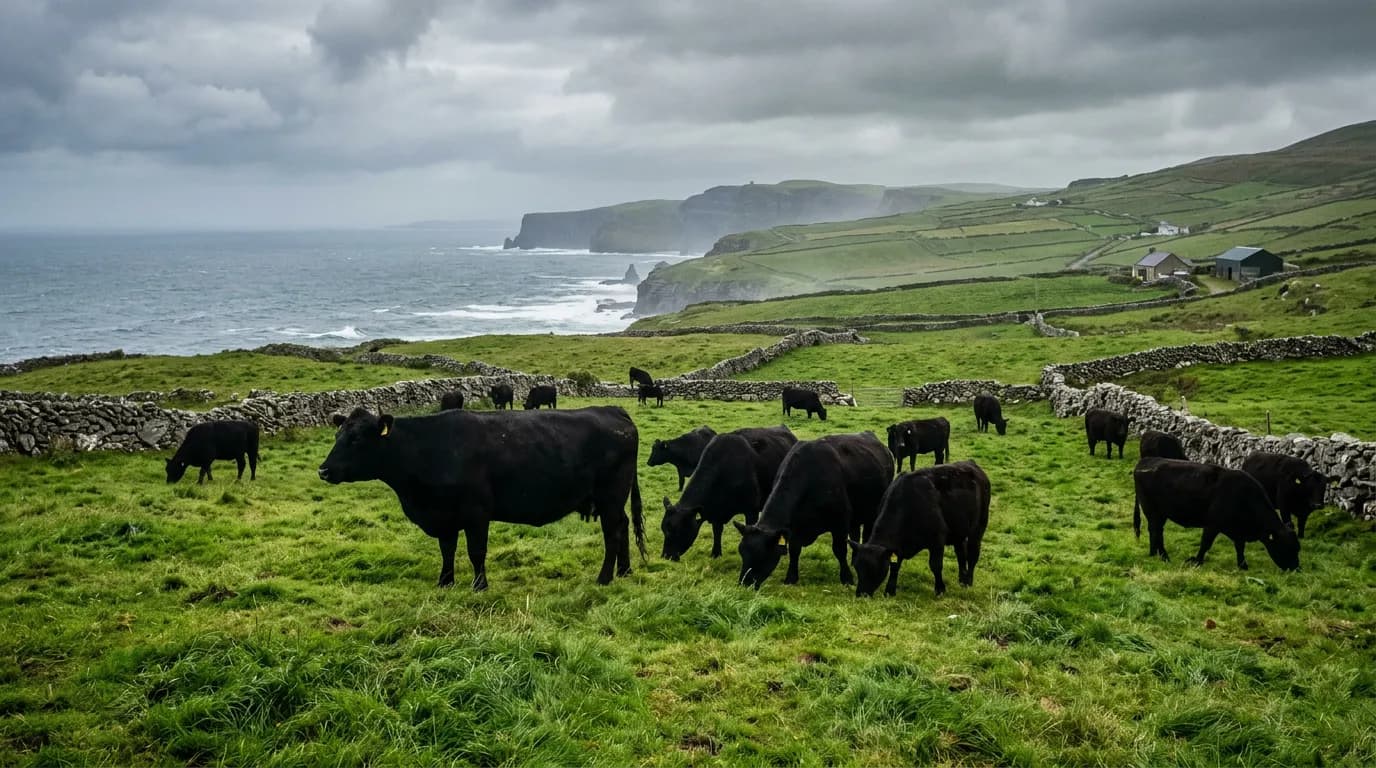
Angus Cattle Breed Guide: Quality, Sourcing & Feeding
A comprehensive guide to Angus cattle for professional buyers — covering breed traits, marbling quality, branded beef programs, Irish sourcing, and transport logistics to Italy.
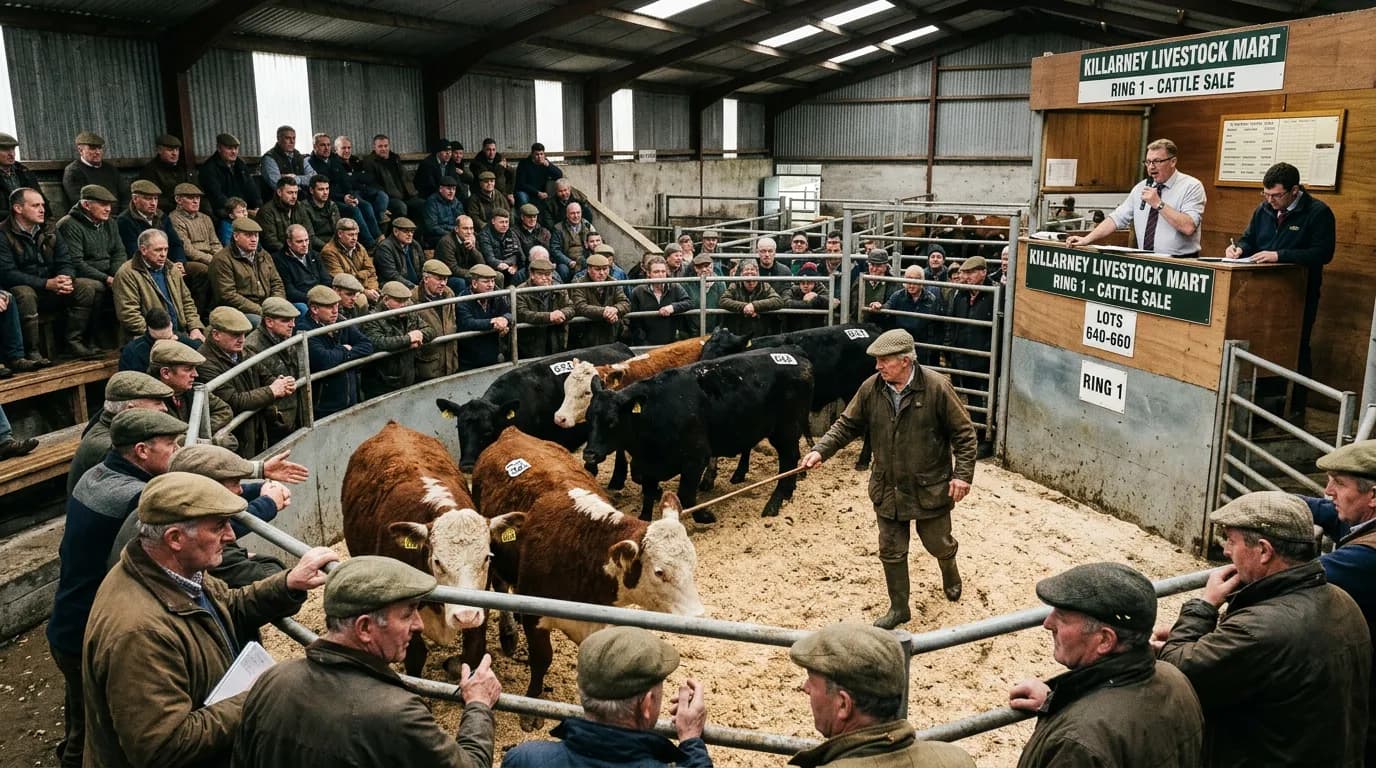
Buying Cattle From Ireland: Angus, Hereford & Export Guide
A detailed guide to sourcing cattle from Ireland — covering grass-based production, key breeds, purchasing through marts, quality assurance, export logistics, and transport to Italy.
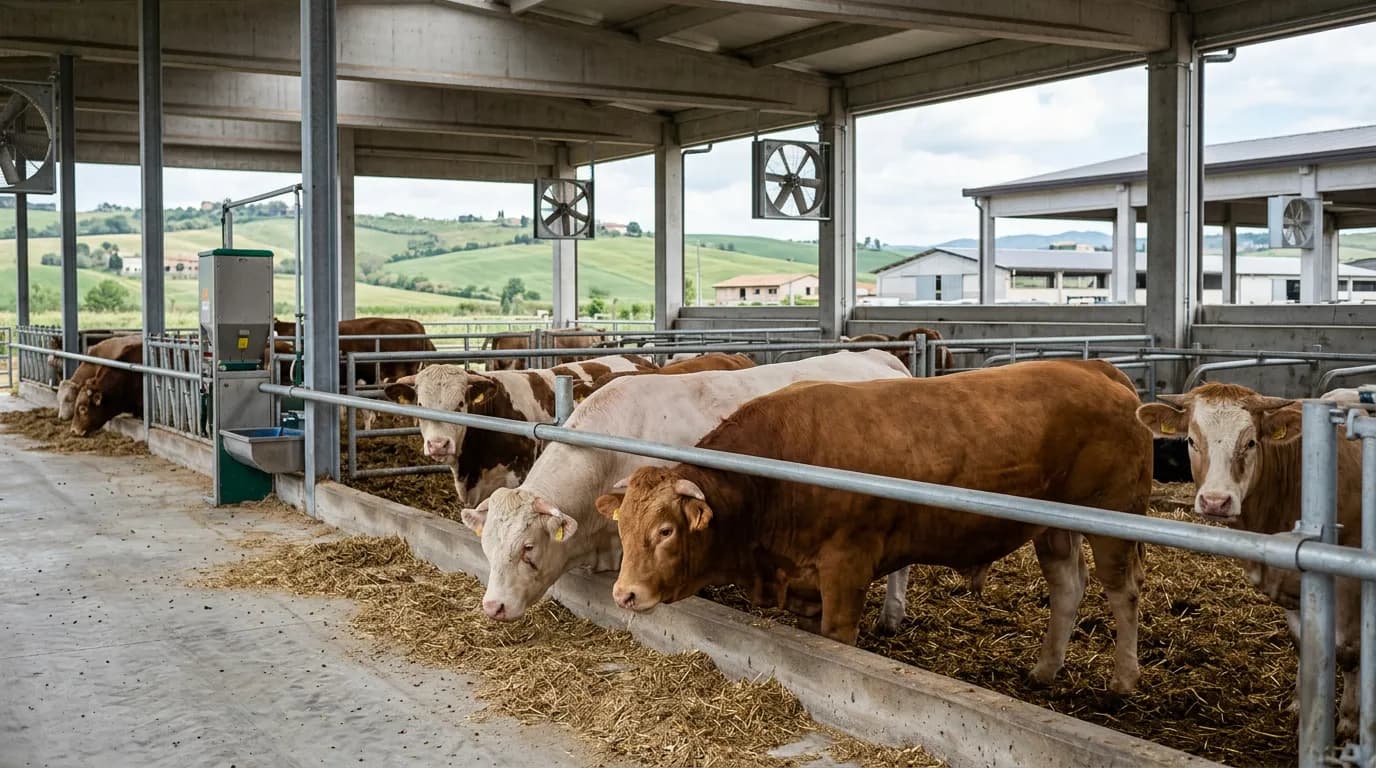
How to Choose the Right Cattle Breed for Fattening in Italy
A practical decision guide for Italian fattening operations — comparing breeds by growth rate, feed efficiency, carcass yield, and market premiums to help you choose the right cattle for your system.
Ready to Source Livestock — or List Your Stock?
Whether you are a buyer looking for specific breeds or a seller seeking reliable access to European buyers, Bovatra manages the full transaction cycle.